3D-printed device restores normal life to cancer patient
3D-printed device restores normal life to cancer patient
2026-03-20
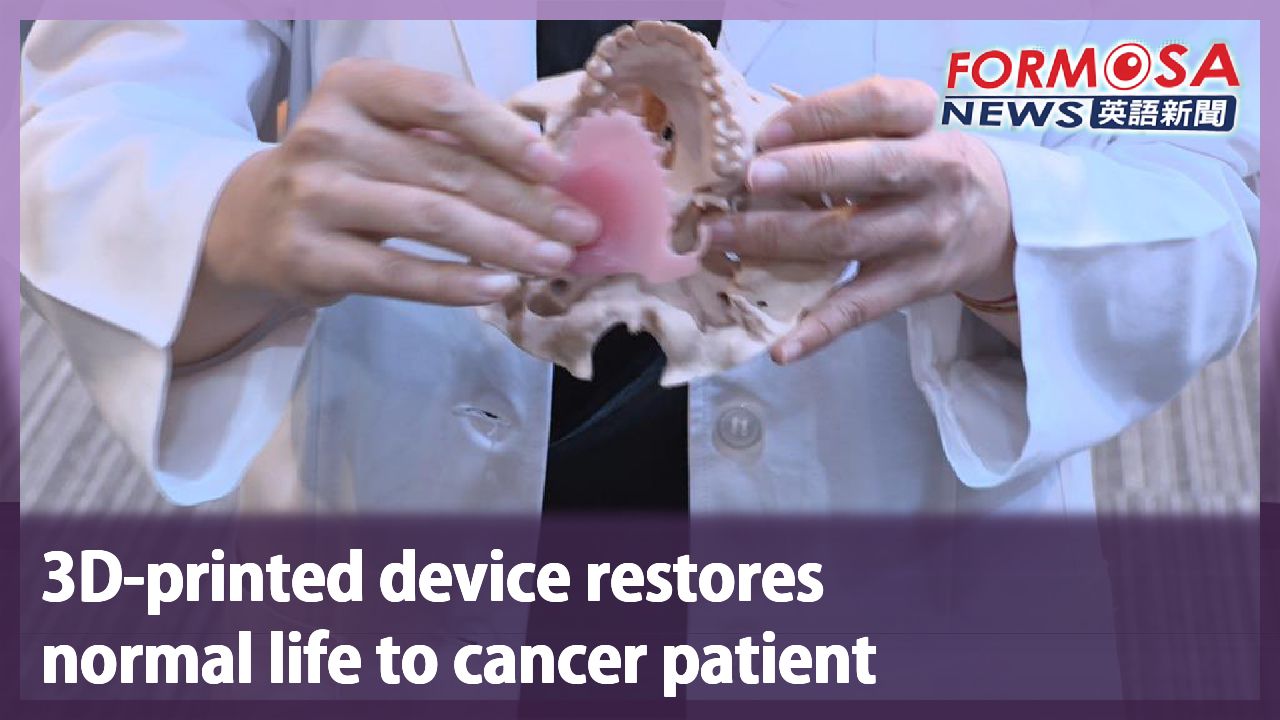
For years, the 68-year-old Ms. Liao relied on a nasogastric tube to eat, unable to share meals with her family and reluctant to go out. But with the help of 3D printing technology, a medical team created a custom barrier plate to separate her oral and nasal cavities. Now she can eat normally without food leaking from her nostrils, finally freeing her from life with a feeding tube.
This video instructs medical personnel on how to insert a nasogastric tube to help patients eat. But it’s not very comfortable, and some people unconsciously pull it out. It also affects social interactions.
Ms. Liao
Patient
Other people would always stare at me, so I got shy and scared. I wear a mask and don’t like to go out. It made me less outgoing, and I closed myself off more.
After an oral infection related to lymphoma left her with a hole connecting her mouth and nasal cavity, 68-year-old Ms. Liao relied on a nasogastric tube to eat for eight years. With her cancer now under control, doctors fitted her with a barrier plate that allowed the tube to be removed, freeing her from needing it ever again.
The new device, known as a digital obturator, fits inside her mouth so Ms. Liao can eat and drink normally. Unlike traditional obturators, which rely on manual impressions, are complex and time-consuming to produce, and have a higher risk of error, the digital version can effectively meet patients’ needs.
Huang Yi-fang
Dentistry department director
The process used to take two to four weeks, but now the digital obturator can be made in just two to four hours. In the outpatient clinic we confirm that water doesn’t flow out the patient’s nostrils when they drink through their mouth, then we ask them to remove the nasogastric tube.
Chen Chien-tsung
Hospital committee vice chair
This technology won a national innovation award last year. Using medical 3D printing and more, the medical team combines the latest technologies.
Restoring patients’ quality of life like this requires the joint efforts of ENT doctors, plastic surgeons, and rehabilitation specialists. Thanks to the latest technologies, medical teams are helping patients like Ms. Liao live a normal life.
For more Taiwan news, tune in:
Mon to Fri at 9:30 pm on Channel 152
Tue to Sat at 1 am on Channel 53
#medicine #technology #ChangGungMemorialHospital #health #patient #qualityoflife #hospital
長庚3D列印製作"數位閉孔器" 助患者擺脫鼻胃管人生
2026-03-20
68歲廖女士長年靠鼻胃管進食,無法和家人用餐,也不敢外出,醫療團隊運用3D列印技術製作阻隔板,有效隔開口腔鼻腔,讓廖女士吃東西不會再從鼻孔流出,成功擺脫鼻胃管人生。
影片中的醫護人員示範,如何插鼻胃管幫助患者進食,只是這過程光看就不舒服,就有人會不自覺自行拔掉,另外也影響社交。
[[病患 廖女士]]
“(別人)就會一直看我,我就害羞了,我就害怕了,我就戴著口罩,不喜歡出門,然後個性上也變得不開朗,就會比較封閉自己。”
68歲廖女士因為淋巴癌口腔感染,術後口鼻穿通缺損,8年仰賴鼻胃管灌食,終於在癌症病情控制下,做了隔板,把鼻胃管摘下來,終身不用再戴。
這款新的隔板叫做數位閉孔器,裝在口腔內,讓廖女吃東西喝東西,不會再流出來,不同傳統閉孔器,必須仰賴人工印模,還有製程繁複耗時,誤差風險高等等缺點,數位閉孔器能順利解決患者需求。
[[林口長庚醫院一般牙科系系主任 黃意方]]
“2到4周的時間,縮短到現在,用數位的方式,2到4個小時就可以在當天完成,我們在門診就會確定患者從嘴巴喝水的時候,不會從鼻孔流出,我們就會請患者拔除鼻胃管。”
[[長庚決策委員會副主委 陳建宗]]
“這樣的技術,事實上,在去年得到國家新創獎。數位醫療3D列印等等,(醫療團隊)都能夠把現在,新的技術結合在一起。”
這項最短時間內恢復功能與生活品質的工程,可不容易,必須結合耳鼻喉科、整形外科和復健科醫師的力量,才能製作完成。數位醫療造福病患,讓更多廖女士一樣的案例,擺脫鼻胃管人生。
更多新聞內容,請鎖定:
民視台灣台(152頻道)週一至週五晚上9:30
民視新聞台(53頻道)週二至週六凌晨1:00
Related News