TaiwanICDF upgrading itself into a strategy-led organization
TaiwanICDF upgrading itself into a strategy-led organization
2026-08-06
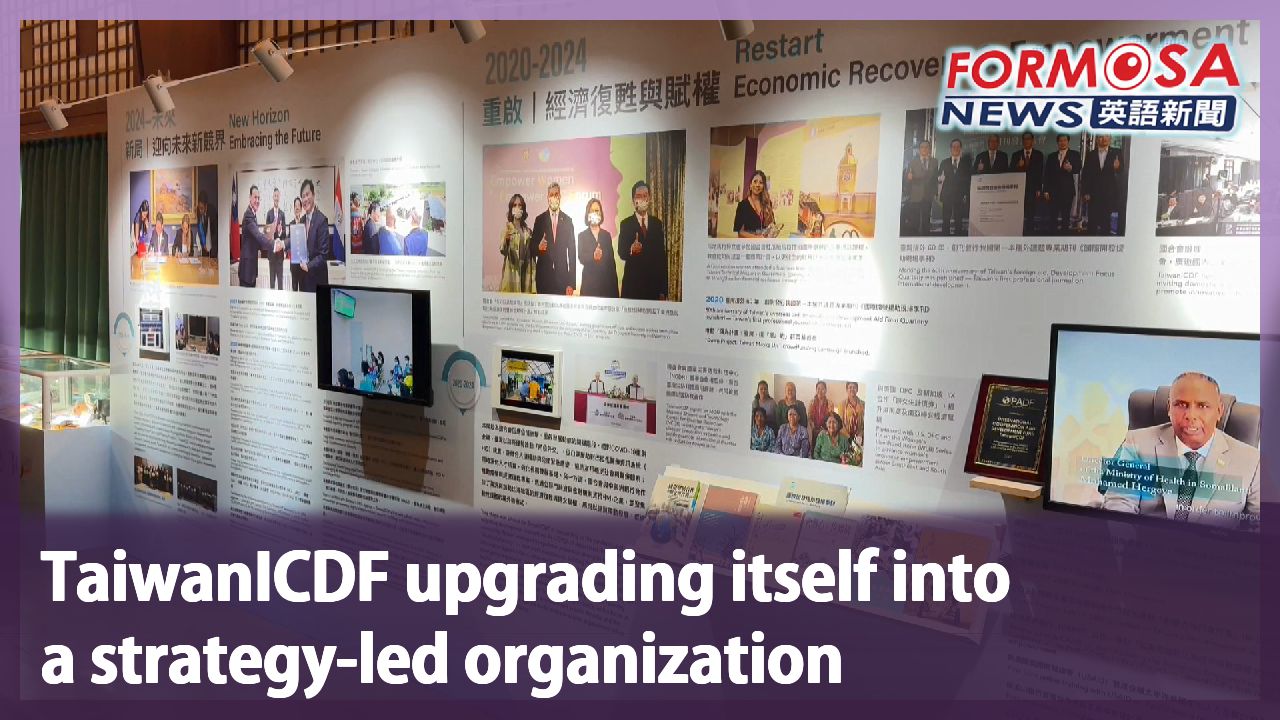
The Taiwan International Cooperation and Development Fund may’ve turned 30 last month, but its focus has already turned to the future. Despite so much of the world now cutting back on foreign aid due to the last half-decade of uncertainty, the ICDF is bucking the trend by focusing on digital innovation, which will allow it to help its diplomatic partners become more resilient and independent.
Recently, Taiwan International Cooperation and Development Fund Secretary-General Dr. Yu-Lin Huang signed a joint declaration with international partners entitled “Investing in Resilience and Prosperity: Driving Sustainable Development through Digital Innovation.” The document’s signing is one more item on the list of achievements for the TaiwanICDF, which has recently been celebrating its 30th anniversary as it undergoes structural reorganization.
Yu-Lin Huang
Secretary General of TaiwanICDF
The ICDF is not a big organization, but with our international partners we’ve established long-term relationships built on trust. During these last two years this trust has been our foundation while we’ve been restructuring our organization and carrying out financial reform. And now we’re already transforming from a traditional public organization that helps carry out the plans of others to a platform with its own strategy.
Formed on July 1, 1996, the ICDF offers recipients Taiwanese expertise in areas including agriculture technology, public health and medical treatment, and educational training. By sharing its technology, talent, and forming long-term relationships, Taiwan has created an important path for diplomacy. However, as a result of the world facing so much uncertainty in recent times, many countries have chosen to reduce foreign aid. Taiwan, with the support of its president and the Executive Yuan, is, instead, going against the grain as it strengthens its connections around the world. For the first time in three decades, Taiwan has created a cooperative framework with Europe and the US, and in recent years Taiwanese manufacturers have been encouraged to invest in other countries, thereby creating a path of cooperation where Taiwan and its allies have both autonomy and equality.
Yu-Lin Huang
Secretary General of TaiwanICDF
In recent years we’ve heard the term debt trap get talked about a lot. The ICDF, however, seeks to foster the local talent of our international partners as well as help them establish systems. By developing their technology and cultivating their ability to govern themselves, we’re actually helping our partners have autonomy when it comes to making decisions.
Instead of heedlessly throwing around large amounts of money, the ICDF is seeking to increase its influence by relying on expertise and innovation. From receiving aid in the past to now exporting its experiences to others, during these last 30 years the ICDF has worked hard to ensure the world can see Taiwan’s many areas of soft power.
For more Taiwan news, tune in:
Mon to Fri at 9:30 pm on Channel 152
Tue to Sat at 1 am on Channel 53
#30thenew20 #TaiwanICDF #digitalinnovation #diplomacy #foreignaid
國合會創立30週年! 轉型"策略平台"拚翻轉台灣外交
2026-08-06
國際合作發展基金會迎來成立30週年,雖然預算規模相對精簡,但近年影響力不減反增,國合會秘書長黃玉霖受訪時透露,國合會透過組織改革與數位創新,轉型為國際合作的「策略平台」,走出一條讓夥伴國「真正自主」的台灣模式。
國合會秘書長黃玉霖,日前代表台灣與跨國夥伴簽署"投資韌性繁榮:數位創新促進永續發展"聯合聲明,也讓國合會在30週年之際,繳出亮眼的轉型成績單。
[[國合會秘書長 黃玉霖]]
“國合會的規模不大,但我們擁有國際夥伴長期的信賴的關係,這兩年來我們以這一份信任作為我們的基礎,進行組織改造跟財務改革,目前我們已經從傳統的官方援助計劃的執行者,逐步轉型成為一個策略性的平台。”
國合會1996年7月1日正式成立,從農業技術、公衛醫療,到教育訓練,台灣用技術和人才以及長期陪伴,串起台灣重要的外交之路。近年來全球局勢動盪,不少國家選擇縮減援外資源,但台灣在總統與行政院支持下,反而透過逆勢強化國際連結,不僅30年來首次深入歐洲與美國,串聯合作網路,近年也積極推動台廠赴海外投資,替台灣及友邦打造自主平等的合作道路。
[[國合會秘書長 黃玉霖]]
“我們最近聽到一個名詞叫債務陷阱。我們是設法協助夥伴國來發展人才、建立制度,發展他們的科技,甚至培養他們的治理的能力,讓我們的夥伴國可以自主判斷。”
不靠撒錢拼規模,靠專業與創新,放大影響力;從過去接受援助,到如今輸出經驗,國合會30年來的努力也讓台灣外交軟實力被世界看見。
更多新聞內容,請鎖定:
民視台灣台(152頻道)週一至週五晚上9:30
民視新聞台(53頻道)週二至週六凌晨1:00
Related News