How to nail the squat: keep your back straight, knees forward and toes on the ground
How to nail the squat: keep your back straight, knees forward and toes on the ground
2023-05-11
Today we take a look at one of the trendiest exercise moves of recent years: the squat. The simple squat has become a favorite of gym lovers. It’s an efficient workout for the glute muscles, and relieves tension from all over the body. But its simplicity can be deceptive. Physiotherapists say lots of people are performing squats wrong. And that can cause more harm than good. We spoke to a physiotherapist from Cathay General Hospital to find out exactly how to get the squat right.
The simple squat can be performed almost anytime, anyplace. It’s a great workout, and can even help relieve knee discomfort. But take care. Physiotherapists warn that performing a squat incorrectly can actually do more harm than good.
Tu Yu-lin
Cathay General Hospital physiatrist
If you put too much force into your thighs, then the pressure of the knee joint goes entirely into the knee. Some people even complain that climbing the stairs has become harder or more painful after they’ve been doing squats.
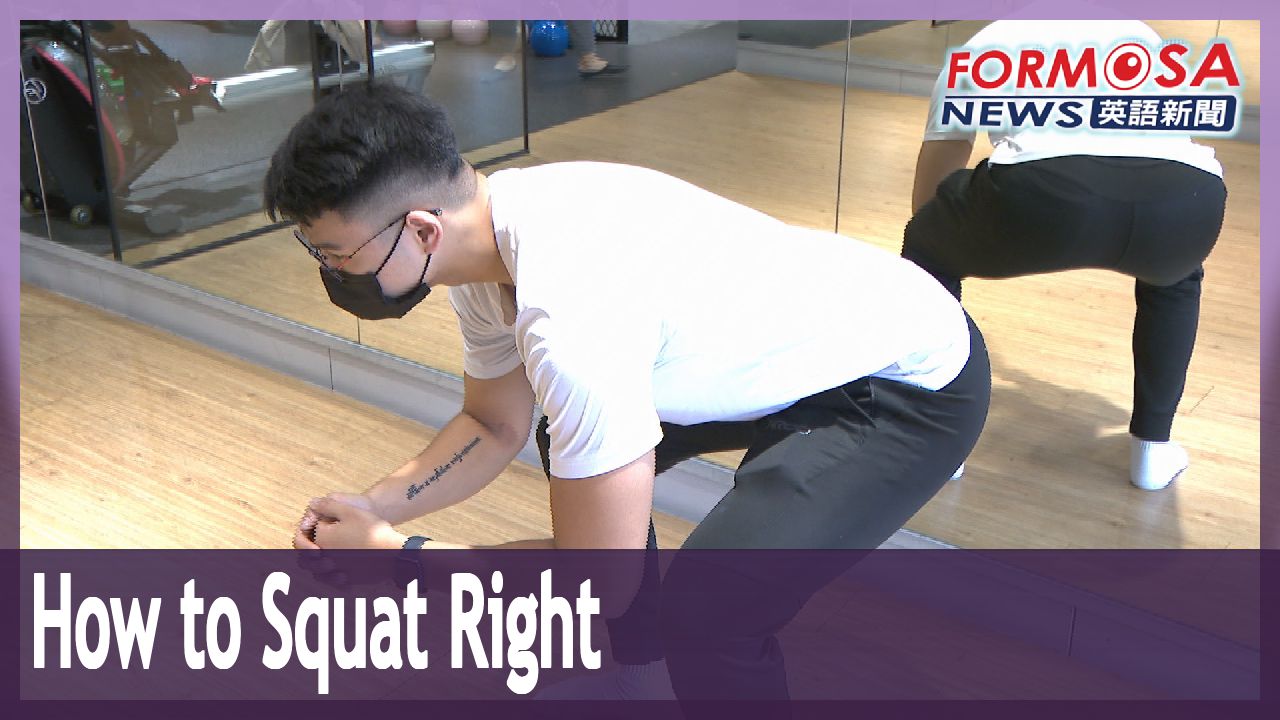
This physiotherapist showed us the various ways he sees patients get squats wrong. Having your back bent forward like this is a no-no. Letting your knees poke out beyond your feet is also bad form. Worst of all is letting your toes lift up off the ground. He has special advice for older adults who want to practice squats at home.
Stand in front of a sturdy piece of furniture and hold it as you squat, to be sure you don’t fall. Take care not to overstrain your thighs. Instead, rely on the glute muscles in your buttocks. Place your feet the same width apart as your shoulders. Point your knees forward – not in – and straighten your back. According to physios, squats have many benefits, including strengthening the glutes, which can relieve the pressure from knees and lower back, as well as strengthening the skeleton, and burning calories. It’s great for adults of all ages.
Tu Yu-lin
Cathay General Hospital physiatrist
It’s a movement that activates the pelvis. Because the pelvis has the glutes, which are like the engine of the lower limbs. So doing squats fires up that engine, and improves the sports performance of our legs.
Performed correctly, a squat can help improve your coordination. According to one scientific journal, it can also train concentration and strengthen your brain health. So what’s not to love? Let’s get squatting.
深蹲恐釀關節發炎!動作不正確傷害大
2023-05-11
深蹲成為近年熱門的健身運動項目之一,不只能雕塑臀部線條、鍛鍊背部和臀肌,更有國外研究指出,深蹲能幫助訓練注意力、對大腦有益。但要注意過度的深蹲,也可能造成關節發炎、肛肌筋膜炎等。掌握適當的頻率及正確的蹲法,才能避免傷害,得到鍛鍊的好處。
簡單動作深蹲,隨時隨地都能做起來,不但能鍛鍊出良好的體態,也希望能幫助緩解膝蓋的不舒服,但要小心,物理治療師提醒,如果深蹲動作不正確,有可能反而造成傷害。
[[國泰醫院復健科治療師 杜昱霖]]
"大腿施力太重,膝關節壓力全都在膝蓋,甚至有些人做完深蹲之後,會抱怨說上下樓梯變更困難、更痛"
治療師也分享在門診中,臨床病患經常做錯的NG深蹲。如果背部會拱起來那就錯了、膝蓋如果超過腳尖也NG,還有腳尖千萬不能翹起來。針對長輩進行深蹲,治療師也有特別交代。
站在固定的家具旁深蹲,確保不會跌倒,尤其注意大腿少用力,多使用屁股的臀部肌肉,雙腳與肩同寬、膝蓋朝前、腰部挺直。治療師表示,深蹲好處多,強化臀肌幫忙分擔膝蓋、腰部的壓力,增進骨骼健康、燃燒卡路里,無論年輕人、長輩都很有幫助。
[[國泰醫院復健科治療師 杜昱霖]]
“活化髖關節的活動,因為髖關節有臀肌,臀肌相當於我們下肢的引擎,所以我們做深蹲可以啟動引擎,增加我們下肢的運動表現”
正確的深蹲,改善全身運動的協調力,更有國際期刊指出,還能訓練注意力集中,進一步強化大腦健康。
Related News