Beyond liquor: How sorghum is driving new industries in Kinmen
Beyond liquor: How sorghum is driving new industries in Kinmen
2023-09-24
Kinmen was once synonymous with battlefields and sorghum liquor. But today the outlying county is famed for much more, including beef noodles and beef jerky. How did this transformation come about? The answer lies in sorghum. Kinmen’s use of sorghum has evolved over time, changing the local economy with it. Tonight in our Sunday special report, we explore modern-day Kinmen and its relationship with this versatile grain.
Along the streets of Kinmen County, small stores offer specialty products. Shopkeeper Fu Yang-hang hawks his goods with an expert air.
Voiceover of Fu Yang-hang
Kinmen specialty shop owner
Kinmen has lots of these essential oil products. They’re a specialty, they’re very famous. They ease rheumatoid arthritis and protect the muscles and bones. This is bamboo leaf-wrapped candy, which is wrapped in the leaves used for zongzi. It carries the fragrance of the leaf. We also have noodles that are made by hand and sundried. Our bestseller is usually beef jerky, followed by Kinmen kitchen knives. Another popular product is Kaoliang sorghum liquor.
The area of Kinmen is about 150 square kilometers, making it one of the smallest administrative districts in Taiwan. But its sandy soil and dry climate make it the perfect spot for growing sorghum.
Wen Shui-cheng
Kinmen farmers’ association head
Kinmen has a long history of growing sorghum. It might have begun in 1952. After the Kinmen Kaoliang Liquor Company was founded, the commander at the time, General Hu Lien, declared that a catty of sorghum could be exchanged for a catty of rice. Due to Kinmen natural conditions, rice doesn’t grow well here. So this exchange was used to encourage farmers to grow sorghum. That sorghum was used to make liquor.
Spanning production, distillation, packaging, transport, and sales, the liquor industry is a major creator of jobs in the area. Thanks to sorghum, liquor is Kinmen’s biggest enterprise. But over on Taiwan proper, sorghum has done even more.
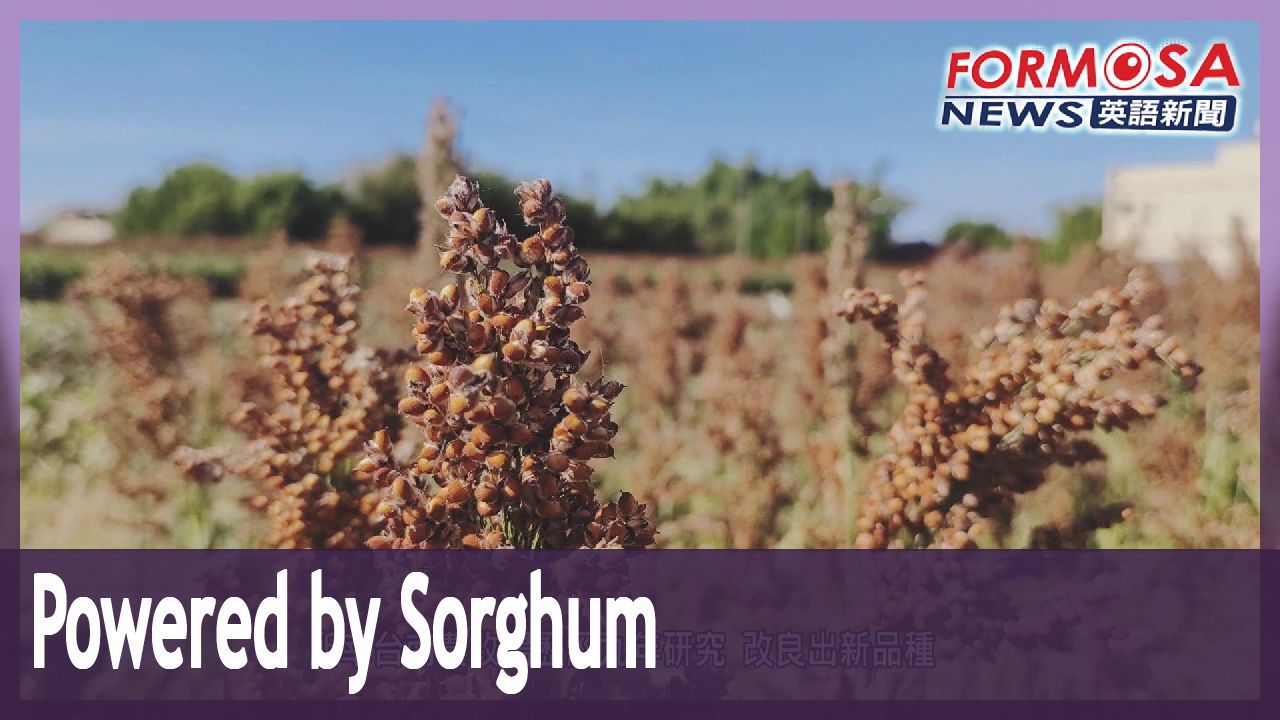
Following the footsteps of farmer Kao Tsung-mao, we walk through fields of sorghum. We’re at Tuku Township in Yunlin County. Sorghum was planted here deliberately, because of the high-speed rail line nearby.
The farmland in this area is irrigated entirely by groundwater. That’s led to severe land subsidence.
Back in the day when rice was grown, it took a tremendous amount of groundwater to flood the fields after rice transplanting.
Kao Tsung-mao
Yunlin farmer
One fen of land required two hours of pumping water. This one plot took more than 20 hours. This plot took more than 10 hours.
The government feared that subsidence would get worse and affect the safety of the nearby high-speed rail. It began encouraging farmers to stop growing rice and switch to less water-hungry crops. That’s why the salt-tolerant, drought-resistant, and heat-hardy sorghum was chosen.
Su Mao-shiang
Agriculture and Food Agency deputy head
The thing about sorghum is that it adapts to its environment very well. Sorghum is even referred to as the camel of crops. It is especially resistant to drought, and it’s the best choice for drought-like conditions.
Although sorghum is highly drought resistant, its ears are densely packed and prone to mold after rain. That was enough to keep many farmers away. But after nine years of work, Tainan’s Agricultural Research and Extension Station developed a new variety of sorghum. This variety has scattered ears that dry more easily after rain.
With that, mold ceased to be a hurdle. Working with the government, Kinmen Kaoliang Liquor Company signed guaranteed purchase contracts with farmers on Taiwan proper, creating a big incentive to plant sorghum.
Ting Cheng-kang
Kinmen Kaoliang Liquor Company GM
These contracts started last year, and they are for a term of three years. We guarantee purchases. As long as the quality is sufficient, we guarantee that we’ll buy it. The price falls around NT$21 a kilogram. Actually, compared to other crops, sorghum takes less capital investment. This benefits the farmers’ bottom line.
Contracts have gone not just to farmers along the high-speed rail, but also to those in drought-stricken areas.
Farmers are contracted in Taoyuan’s Xinwu and Guanyin districts, which are designated as “water resource competition zones” by the government.
Chiang Hsieh-you
Taoyuan Guanyin farmers’ association head
All of Taoyuan, and especially Guanyin District, draws water from the Shihmen Reservoir for irrigation. Because the water in Shihmen Reservoir is needed for agricultural irrigation, industrial processes, and residential use, everyone is competing for water.
Su Mao-shiang
Agriculture and Food Agency deputy head
One hectare of rice needs 12,000 to 13,000 metric tons of water. But if I grow sorghum, I only need 1,200 to 1,300 metric tons, which is just one-tenth of the water needed for rice.
For the government, growing sorghum in Taiwan is way to slow subsidence and save water. For distilleries in Kinmen, Taiwanese sorghum is a high-quality product with a steady supply. It’s a winning proposition for all parties. But the process of making sorghum liquor also creates an environmental problem: distillers’ grains.
Inside the distillery, giant vats turn up above. The steam fills the air with the scent of sorghum.
Hsu Chien-yang
Kinmen distillery director
After the sorghum goes through the pipeline, it goes directly into the high-pressure, high-temperature cooking pot, which mainly removes residue, sterilizes, and gelatinizes it. After gelatinization, it is mixed with liquor yeast. After the liquor yeast is added, it’s cooled down. Then it goes into the temperature-controlled fermentation room for fermentation.
The process of making sorghum liquor takes 22 days. At the end of it, the sorghum that remains is called distillers grains. Kinmen distilleries produce up to 280 tons of this byproduct each day, generating a vast environmental footprint. The challenge is finding a sustainable way to deal with the waste.
Mr. Chang jumps off his truck and onto an excavator. He skillfully scoops distillers grains, filling the back of the truck. After a 20-minute drive, his truckful of grains arrives at the Kinmen Livestock Research Institute.
Lee Chin-ping
Kinmen Livestock Research Institute manager
As you all can see, the stock feed we use every day contains distillers’ grains. Distillers’ grains are sticky. They can stick to hay or to the clover pellets or wheat bran.
In 2011, the Kinmen Livestock Research Institute brought in Australian Brangus, a breed of beef cattle. Local farmers were encouraged to breed them to improve meat quality. Distillers’ grains were made available as free feed. That helped to build a thriving cattle industry in the area.
Wen Shui-cheng
Kinmen farmers’ association head
Cattle that eat distillers’ grain have a certain flavor – the meat contains certain amino acids that distinguish it from imported beef. We currently have 6,000 heads of cattle. That probably makes Kinmen the second largest beef producer in Taiwan, second to Pingtung.
Today, 70% to 80% of Kinmen’s cattle feed is free distillers’ grains. The free material saves farmers tens of millions of New Taiwan dollars in cattle feed. It’s also been a boon for the local restaurant sector.
A piping bowl of beef noodles, starring a Tomahawk steak. This is a new addition to Kinmen’s culinary scene, which is famous for beef raised on distillers’ grain.
The grains impart a sweet, delicate flavor to the meat.
Besides restaurants, there’s another sector that benefits from spent grains.
Hsueh Cheng-chen is on patrol at his beef jerky factory. He’s raised cattle and made jerky for three decades. Kinmen’s beef jerky is famous far and wide, and it’s a bestseller among tourists.
Hsueh Cheng-chen
Beef jerky factory owner
Whatever the cow eats, its body will have that fragrance, and its meat will have that flavor. Typical gamey flavors come from the feed. It’s a grassy flavor. Our cows here in Kinmen eat distillers’ grains, so there is no gaminess. If you’re especially sensitive, you might even be able to detect a whiff of liquor.
Local officials and distilleries have proactively promoted the beef industry. Raising cattle on spent grain has achieved more sustainable, eco-friendly liquor production.
Hsueh Cheng-chen
Beef jerky factory owner
Kinmen’s distillers’ grains give our beef jerky a special story, and that’s created the market demand. Our beef jerky and beef noodles are completely and independently traceable. We can look at a bag of beef jerky and know which cattle it came from and which farmer raised it. That’s all to protect our industry and protect our farmers.
Seventy years ago, Kinmen was synonymous with battlefields and liquor. But with its signature beef and water-saving grain contracts, Kinmen has added new chapters to its story.
For more Taiwan news, tune in:
Sun to Fri at 9:30 pm on Channel 152
Tue to Sat at 1 am on Channel 53
高粱超給力
2023-09-24
早期講到金門,大家想到的不外乎是戰地與高粱,現在很多人會想到全牛大餐與牛肉乾。金門牛在近十年來成為金門名物之一,牠是怎麼崛起的?這背後的答案是高粱。高粱改變了金門,現在也正在影響著台灣本島,因為這幾年來,金門當地的酒廠,與台灣農民契作種植大面積的高粱,不但減緩了高鐵沿線地層下陷的問題,也搶救了水資源,為什麼高粱這麼神奇?而酒廠這麼做有什麼好處呢?一塊來了解。
金門街道上,一間間特產店賣的是在地商品,介紹起特產,老闆傅仰洹如數家珍。
[[聲音來源: 金門特產店老闆 傅仰洹]]
“金門有很多一條根,這個是特產,很出名。竹葉貢糖是最開始包粽葉的貢糖,有粽葉香。還有麵線,麵線是手工加上日曬,第一名一般都是牛肉乾,再來就是金門菜刀,還有一個最大的賣點,就是我們的金門高粱酒””
金門面積僅150平方公里,在全國縣市中屬超級後段班,但砂質的土壤加上少雨的氣候,卻意外成為種植高粱的樂園。
[[文水成 金門農會總幹事]]
“金門種高粱應該是歷史滿久的,應該是民國41年的時候,金酒公司成立之後,當時的司令官胡璉將軍說,用一斤高粱換一斤大米,因為金門的自然條件,沒有辦法種水稻,用這個方式鼓勵農民種高粱,高粱就來釀酒”
從生產、製酒、包裝、運輸、販售,在地化的產業鏈帶動蓬勃就業。高粱讓酒廠成為金門第一大企業,不過它的功能不僅於此。
跟著農民高宗懋腳步,我們穿過高粱田,這裡是雲林土庫,選擇在這裡種高粱,背後有個重責大任,原來和旁邊的高鐵行車安全息息相關。
這一帶的農田,灌溉水全抽自地下,導致地層下陷嚴重。
以前種水稻時,光是插秧後淹田,就要消耗大量的地下水。
[[高宗懋 雲林農民]]
“一分地大概要抽兩小時,這片要二十幾個小時,這片要大概十幾個小時”
政府憂心地層持續下陷,將影響高鐵安全,積極推動水稻轉旱作,於是耐鹽、抗旱、耐高溫的高粱成為最佳選擇。
[[蘇茂祥 農糧署副署長]]
“高粱的特性,它適應環境的能力很強,有些把高粱稱呼叫「駱駝作物」,抗旱能力特強,是最佳的耐旱作物”
雖然是優良的耐旱作物,不過高粱穗屬濃密型,一旦下雨就容易發霉,一度讓農民敬而遠之。所幸台南農改場歷經九年研究,改良出新品種,散開的高粱穗,雨後也容易乾燥。
克服了發霉難題,接著在政府的媒合下,金門酒廠與台灣農民契作,保證收購,這才大大提高農民的栽種意願。
[[金門酒廠總經理 丁丞康]]
“我們去年開始契作,是為期三年的契作,我們都保證收購,只要是品質是夠好的,我們都保證收購,大概價錢都是在21元每公斤,事實上是比一般的其他作物,它所投入的成本要低,對農民收益是有幫助”
這次契作不僅高鐵沿線,還擴及水資源匱乏區。
例如桃園的新屋與觀音,就是政府劃定的「水資源競用區」。
[[江謝滺 桃園觀音農會總幹事]]
“我們整個桃園區,尤其是觀音,都使用石門水庫的水源來灌溉,因為石門水庫的水,必須要灌溉農業用水,還有工業用水,民生用水,大家一起在競爭水”
[[蘇茂祥 農糧署副署長]]
“水稻一公頃要的水量,大概要1萬2到1萬3千公噸的水,如果我種高粱,大概只要1200到1300噸的水,等於只有十分之一的水”
對政府而言,種高粱可減緩地層下陷,減少搶水問題,至於對金門的酒廠,台灣高粱代表高品質的穩定貨源,創造了多方共贏,不過釀造高粱酒後,卻又有個棘手難題,酒糟。
走進酒廠,一個個巨大鍋子正在空中翻滾,奔騰熱氣散著高粱香。
[[金門釀造業廠長 許荐洋]]
“高粱經過管橋之後,直接進到高壓,高溫的蒸煮鍋,主要是去渣,殺菌跟糊化,糊化之後拌麴,拌麴之後降溫,進到溫控的醱酵間裡面醱酵”
一顆高粱從進酒廠到出酒廠共歷經22天,成為不再使用的酒糟。金門酒廠每天產出高達280噸的酒糟,直接丟棄,將衍生環境問題,有沒有更永續的處理方法呢。
跳下卡車,跳上怪手,張先生熟稔地剷起醱酵中的酒糟,這一大車的酒糟,在道路上奔馳20分鐘,來到一個金門畜產試驗所。
[[金門畜試所管理人員 李錦屏]]
“大家可以看得到,我們日糧裡面有酒糟,酒糟它有黏性,它可以黏著住乾草,還有其他一些苜蓿粒或者是麩皮”
2011年,畜試所引進澳洲肉牛,布拉安格斯種,讓當地農戶配種改良肉質,加上所有農戶都可免費拿酒糟養牛,兩者成就了金門優質牛肉。
[[金門農會總幹事 文水成]]
“吃了酒糟之後,整個酒糟牛肉裡面的風味,有一些氨基酸,是比進口牛肉有特殊性的,我們現在飼養頭數應該還有六千頭,應該是除了屏東之外,我們金門肉用牛應該是算全台灣第二大的”
如今金門牛飼料中七到八成,都來自免費的酒糟,六千頭牛等同幫金門農戶省下,數千萬的飼料費,也帶動牛肉餐飲業欣欣向榮。
超大的戰斧牛排麵,是金門這家酒糟牛肉餐廳的新菜色。
釀酒殘餘的酒糟,化成金門牛肉中清甜風味。
在餐飲業外,還有一項產業也受惠於酒糟。
薛承琛巡視著肉乾工廠,他投入養牛,做肉乾已30年,金門牛肉乾名聞遐邇,是最好入手的伴手禮。
[[薛承琛 牛肉乾工廠負責人]]
“牛吃什麼,身上就什麼味道,肉就什麼味道,所以一般的牛腥味,就是來自於飼料的味道,就是草腥味,我們金門牛吃酒糟,就沒有所謂的牛腥味,敏感一點的,甚至可以聞到淡淡的酒香味”
在縣府與在地酒廠合作,大力推動養牛後,酒糟牛代表著環境友善與循環經濟。
[[薛承琛 牛肉乾工廠負責人]]
“金門酒廠的酒糟,讓我們的牛肉乾有故事性,創造我們的市場,在牛肉乾,牛肉麵,我們都有做自主溯源,都可以知道這包牛肉乾,是哪一頭牛,哪一個農戶養的,就是要保障這個產業,保障農民”
70年前,戰地與高粱酒是金門的代名詞,如今酒糟牛與台灣節水高粱,讓金門榮景中,又添上更多斑斕色彩。
更多新聞內容,請鎖定:
民視台灣台(152頻道)週日至週五晚上9:30
民視新聞台(53頻道)週二至週六凌晨1:00
Related News