Badminton embraces shuttlecocks made of nylon instead of feathers
Badminton embraces shuttlecocks made of nylon instead of feathers
2024-08-14
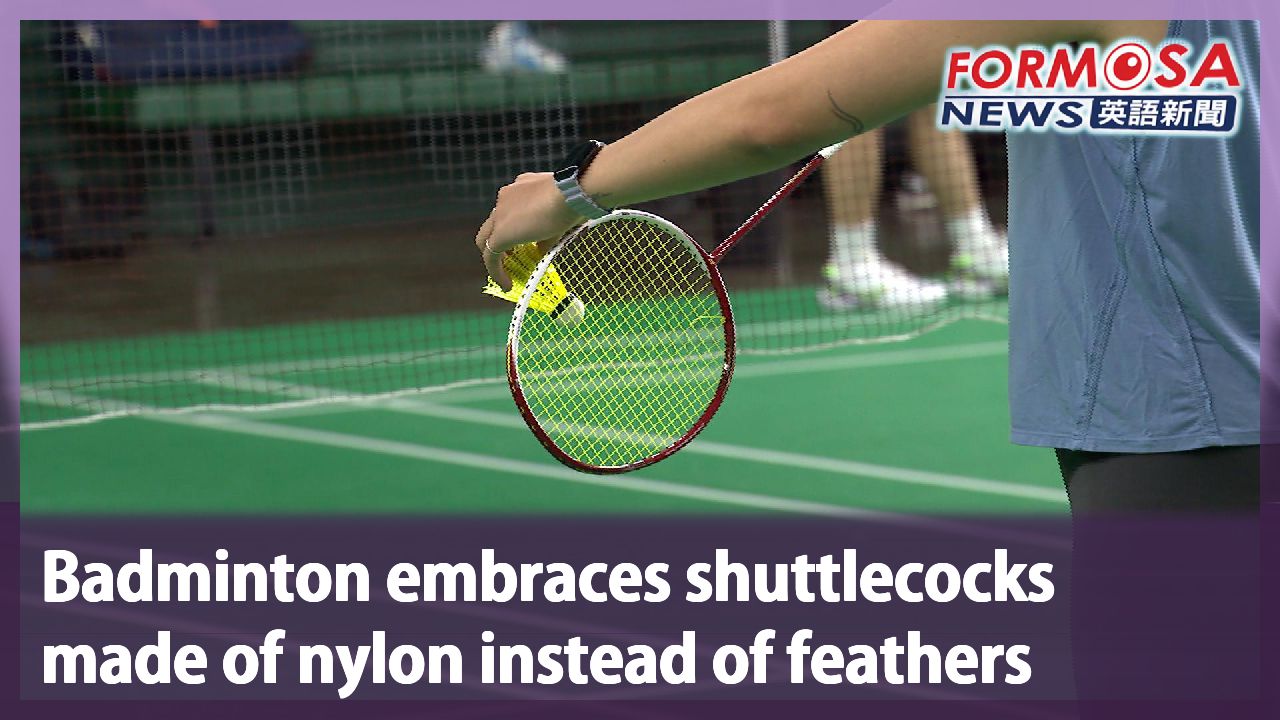
Badminton fever has gripped Taiwan since the triumph of doubles duo Lee Yang and Wang Chi-lin at the Paris Olympics. That’s caused a spike in new students for badminton coaches. But students who are playing badminton again for the first time in 20 years might be surprised to find that shuttlecocks have changed. Many gyms have switched to using shuttlecocks made of nylon, instead of the traditional feathers. Let’s go courtside to find out more.
Badminton players duke it out on court. Since Lee Yang and Wang Chi-lin won gold in Paris, badminton fever has gripped the nation, creating great business for badminton courts.
Lin Shu-yu
Badminton coach
Business is up by about 10%. Just an hour or so after the match, the gym was getting calls from people wanting coaching.
More and more people in Taiwan are playing badminton. But the cost of shuttlecocks is rising too. One box of top-quality shuttlecocks cost NT$840 in 2020, but this year it’s NT$1,100, an increase of 30%. For some businesses, that’s too steep, and they’re rolling out the longer-lasting nylon shuttlecocks instead.
Mr. Huang
Badminton student
They’re great for beginners. The nylon shuttlecocks are very sturdy, so they’re great for practicing.
Mr. Yen
Badminton student
The nylon ones are more flexible, and they feel different in terms of speed. So a lift shot will feel a bit more solid.
So what’s the difference between nylon and traditional shuttlecocks? Traditionally they’re made of duck or swan feathers but nylon is a plastic. Both weigh 5 grams. Classic shuttlecocks are vulnerable to the elements and fly less steadily than nylon. And traditional ones allow you to control the direction more easily. Each has its strengths; but nylon is vastly more long-lasting.
Lin Shu-yu
Badminton coach
Our nylon shuttlecocks retail for about NT$50 each. Traditional shuttlecocks might be NT$42. But a nylon one can be used for seven or eight matches without breaking. The Badminton World Federation has allowed it, you can play matches with nylon.
Nylon shuttlecocks cost more per unit, but they last longer and don’t get deformed, so they’re much more economical for a gym with high usage like this one.
For more Taiwan news, tune in:
Sun to Fri at 9:30 pm on Channel 152
Tue to Sat at 1 am on Channel 53
國內羽球熱! 羽毛球成本直直漲業者省成本推"尼龍球"
2024-08-14
台灣羽球男雙〝麟洋配〞在巴黎奧運勇奪金牌,舉國歡慶,引發國內羽球熱,羽球館的業績,也跟著帶動成長。不過,羽毛球成本越來越高,以市售最高等級的羽球來說,從2020年到今年,大約漲了三成左右,有球館業者為了開源節流,推廣較耐用的"尼龍球"。
民眾在羽球場揮汗飆球技,「麟洋配」奧運奪牌後,全民瘋羽球,帶動羽球館業績。
[[甲組羽球教練 林書羽]]
“生意多大概多一成多左右。比賽後的一個多小時,馬上球館就收到要來上教練課。”
國內打羽球的人口越來越多,不過,羽毛球的成本越來越高,以市售最高等級的球為例,2020年一桶約840元,到了今年一桶要價約1100元,漲幅約三成左右,業者吃不消,決定推廣較耐用的"尼龍球"。
[[球友 黃同學]]
“很適合新手。尼龍球很耐打,然後所以你在打起來的時候就很適合練習。”
[[球友 顏同學]]
“尼龍球的彈性比較好,然後速度的感覺不一樣,就是挑球的部分會感覺比較紮實這樣子。”
傳統羽球跟尼龍球差在哪?羽球主要材質是,鵝毛或是鴨毛,尼龍球則是塑膠;重量部分都是5公克;不過羽球容易受到環境影響,飛行較不穩定,尼龍球比較穩;但傳統羽球好控制方向,尼龍球比較難控制,兩種球種各有特色,但耐用的程度就大不相同。
[[甲組羽球教練 林書羽]]
“像我們尼龍球這邊的話,就是市售一顆是50元左右,那傳統羽毛球的話,一顆可能落在42塊左右。(尼龍球)一顆球我大概可以打個七、八場,對那其實也不會壞掉。世界羽總有通過這項,就是可以拿尼龍球來打比賽。”
以單價來看,尼龍球比傳統羽球高,但也更耐用、不易變形,因此對需要大量用球的羽球館來說,成本相對低。
更多新聞內容,請鎖定:
民視台灣台(152頻道)週日至週五晚上9:30
民視新聞台(53頻道)週二至週六凌晨1:00
Related News