Taiwanese snacks: sweet potato in the spotlight
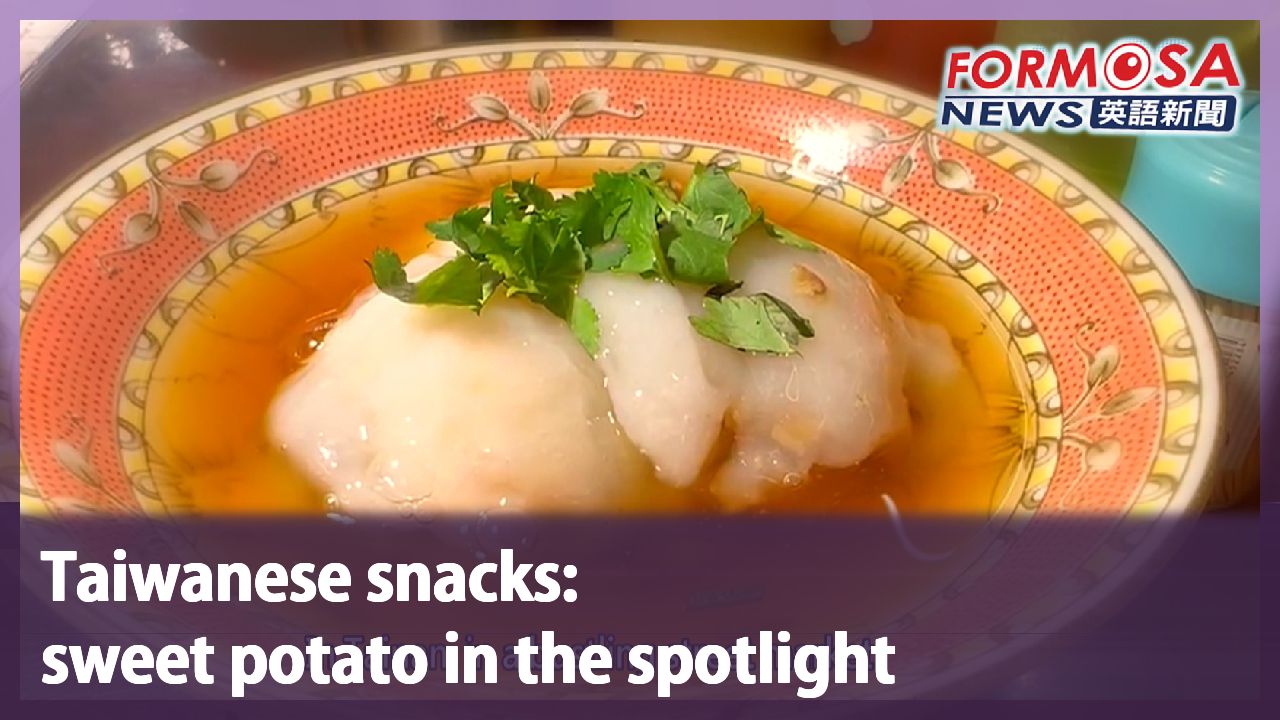
Taiwanese snacks: sweet potato in the spotlight
2024-09-01
Taiwanese snacks have a big reputation. They’re not just popular with locals - they’re a must-try for any tourist in Taiwan. The history of Taiwan’s snacks is inextricably linked with the country’s crops. For example, oyster omelettes, ba-wan meatballs, rice cakes are all made with sweet potatoes, which became popular in Taiwan due to rice shortages. Today we begin a three-part series on the evolution of Taiwanese snacks.
Steamed, boiled, fried, deep-fried: dozens of well-known street foods make up the taste of Taiwan we know and love.
Milky white oysters sizzle on a teppanyaki grill. Egg is drizzled on, sometimes beansprouts, and then a special sauce thickened with cornstarch. A garnish of leaves, a flip, a final sizzle, and a delicious oyster pancake is served.
Ou Chien-chih
Third-generation oyster pancake expert, Anping
My grandma says that in the old days they were called “tsian-te.” They were made of simple, local ingredients: bean sprouts, vegetables, some sweet potato flour added in, mixed together and fried, into a pancake shape. Later, when they had oysters – because they produce oysters here in Anping – they added the oysters in, making the oyster pancakes we have today.
According to local legend in Tainan’s Anping, when Zheng Chenggong’s army landed here in 1661, making an attack on the Dutch colonists, the Chinese army ran out of rations.
Zheng’s army made a sauce with local ground sweet potatoes, to avoid starvation. They deep fried the batter with local foods, greens and meats, to make “tsian-te.” These cakes helped the army regain their strength, and win Fort Zeelandia from the Dutch.
Chen Ching-yi
Food writer
In the late Qing dynasty, they had foods like oyster pancakes. We see in the documents that on the coast of China’s Fujian and Guangdong provinces, they had those kinds of foods. But following migration, when they came to new places, these foods evolved.
But these ingredients are put together in very different ways, making their taste and appearance differ greatly from the Taiwanese oyster pancake.
Benson the Teacher
Food culture writer
In Chaoshan they make “oyster bakes,” which are really bakes. They mix the oysters, sweet potato powder, salt and chilis together, and bake them like a flat cake. More unusually, in Malaysia. They first make a cake, made of the batter and egg. Then they put that to one side, and stir-fry the oyster. Then they mix the cake and the oyster. And they eat it with chili sauce on top.
For Taiwanese oyster pancakes, the quality of the pancake hinges on this vital batter sitting in a bowl by the grill.
Ou Chien-chih
Third-generation oyster pancake expert, Anping
We make ours with pure sweet potato powder, with some simple seasonings. The water ratio is about 1:3. You go by experience. Of course you need the right heat level.
Sweet potato flour is a staple made of sweet potato starch that is used to thicken sauces. Sweet potatoes were more readily available than rice in Taiwan’s early agricultural society.
In 1603, Chinese Ming dynasty scholar Chen Di wrote in “Dong Fan Ji” that Taiwan had “onions, ginger, and sweet potatoes.” Sweet potatoes have been a staple in Taiwan since the 17th century. But sweet potatoes don’t keep long after harvesting.
In1921, Japanese writer Iwao Kataoka noted in the “Journal of Taiwanese Customs” that people would grind up sweet potato peelings, add water, and let it thicken and dry, to create a powder that kept for long periods.W
Chen Shu-hua
Author of “The History of Changhua Snacks”
In some villages, they would add lots of ingredients to the sweet potato powder, to make a food they considered very delicious. Even if they just added very simple pickled radish, they still thought it was delicious.
Sweet potato-based sauces have a different consistency from those made of the more traditional arrowroot. and even from potato starch, making sweet potato a good choice for the wrapping of many snacks. The search for the perfect “chewy” texture became a feature of Taiwanese snack culture.
Taiwanese meatballs – or “ba-wan.” Ba-wan boast shiny, translucent skin and springy, chewy texture, making them the quintessential sweet potato flour-based snack.
The chewy ba-wan skin is dipped in sweet sauce, or simply drizzled in thick soy sauce: a tempting aroma and a perfect bite.
The proportion of sweet potato to rice paste is the key factor in adjusting the texture of a ba-wan.
More sweet potato flour makes the ba-wan more translucent and chewy. That’s the ideal texture for Changhua’s traditional ba-wan makers.
Chen Shu-hua
Author of “The History of Changhua Snacks”
Later, the sweet potato was selectively bred, so people in Changhua City started to make ba-wan with lots of sweet potato and not add rice paste anymore. But outside of Changhua City, such as in Lukang, Yuanlin, elsewhere in Changhua County, or even farther north, they have rice in their ba-wan, and they add sweet potato to the rice.
Taiwanese ba-wan are cooked in two main styles: southern-style steamed, and northern-style deep-fried. Changhua northern-style deep-fried is more common.
Huang Wan-ling
Food writer
Steam them until they’re hot and separate. Put them in cold oil and warm it gently: not so hot that they form a skin. Gently fry them until they’re soft, and they’re done. Ba-wan have thick skins. They just have a little filling inside. But the filling is very aromatic, and its scent gets better the more you chew.
There are many types of ba-wan across Taiwan.
Changhua ba-wan are large, disk-shaped, and often filled with mushrooms or bamboo shoots, or sometimes even salted duck egg.
Beidou ba-wan are also filled with pork and bamboo shoots, but they’re triangular, just one hand big, and served in pairs.
Ba-wan from Puli, Nantou, are eaten in a special way. Locals like to start by eating the skin, leaving the filling and sauce in the bowl, then pouring on a big-bone broth to drink it as a soup.
In the south, in Tainan, Kaohsiung and Pingtung, it’s all about the ba-wan steamed in clear broth. Taiwan has developed many different types of ba-wan, but which one was the first?
Fan Chen-sen
Fourth-generation ba-wan expert, Beidou
How can we spot a Beidou ba-wan? It should have a mark on the back, like three fingers. And the bottom of it should look something like a map of Taiwan. That makes it an authentic Beidou ba-wan.
Beidou ba-wan are wrapped by hand, which results in three “marks” that indicate the authentic Beidou ba-wan. This technique is an old Fan family tradition.
Chen Shu-hua
Author of “The History of Changhua Snacks”
It was written in 1930. That means, before Mr. Fan, people were already selling ba-wan on shoulder poles. So I can say for sure that by the 1930s roast ba-wan were being sold in Changhua City. They were using the word “ba-wan.”
When Changhua’s ba-wan were first recorded in written documents, the Fan family’s Beidou ba-wan were being called “fen-wan.”
They contained fillings like dried pickled radish, until World War II ended in 1945, when the Fans began putting pork in their “fen-wan,” marking the birth of what we call “Beidou ba-wan.”
Wang Hao-yi
Cultural historian
Beidou ba-wan and Changhua ba-wan have one important difference. In Beidou they still make ba-wan by hand. They form the balls, put them in the steamer, set the shape, and then deep-fry them. Normally, in Changhua, and smaller towns under its influence, they use a mold for ba-wan, to press them into a disk shape.
Ten catties of arabica rice are stirred in this bucket, to create a thick sauce. Unlike in Changhua, where chewiness is king, The makers of southern clear-broth steamed ba-wan prefer a higher proportion of arabica rice in their ba-wan skins.
Chen Feng-chiu
Second-generation steamed ba-wan expert
Bamboo steam baskets keep the moisture better. If you use metal baskets, the steam escapes very fast. When the steam is gone, the ba-wan won’t be so wet and juicy. They won’t be so good, they’ll be a bit dry. Our ba-wan are not like the fried ones. They get deep-fried after the steaming, but ours do not. If we don’t hold onto the steam, the ba-wan will be too dry and not good.
Ba-wan differ in cooking techniques. And cooks have also brought a lot of creativity to the taste of their ba-wan, using lots of varied local ingredients.
In Hsinchu, the Hakka town of Beipu produced a special using traditional Hakka flavors: ba-wan with lees and pork.
In the ba-wan stores of Miaoli, one finds Hakka ba-wan with dried bean curd.
In Tainan, in a bustling street market once known as Sakariba, founded in the Japanese era, they invented clear-steamed shrimp ba-wan.
At this well-established store in Pingtung, the skin contains burdock, a flavor from Guilai, the homeland of the store owner’s wife.
Chen Feng-chiu
Second-generation steamed ba-wan expert
Then, one day one of the kids wrote in a school essay, “What are the specialties of Guilai?” He wrote, “Guilai specialties are burdock and ba-wan.” I thought, “Huh, it’s not a bad idea!” even if it does come from a school essay. So I put the burdock and ba-wan together.
Hundreds of years ago, to stave off famine, people first started grinding up sweet potato into a powder. What was once just a way to fill the stomach changed with Taiwan’s economic growth, gradually picking up lots of local twists, to become one of modern Taiwan’s favorite dishes.
Join us next week, as we look at how Chinese immigration shaped the evolution of Taiwanese snacks.
For more Taiwan news, tune in:
Sun to Fri at 9:30 pm on Channel 152
Tue to Sat at 1 am on Channel 53
從農家點心到觀光美食 看「台灣小吃的故事」
2024-09-01
說到台灣小吃,聲名遠播,不僅台灣人習慣吃,外國觀光客也必然要品嘗。其實小吃的源起,跟在地食材息息相關,像蚵仔煎、肉圓、碗粿等基本食材,就是採用在地的地瓜粉製成。地瓜起初是先民為了止飢,解決米糧不足的問題。一連三個禮拜,我們將為您介紹台灣小吃的發展。
蒸、煮、炒、炸,數十種小吃,一道一道拼湊起台灣民眾,最熟悉的台味記憶。
乳白色鮮蚵,在鐵板上煎到滋滋作響,淋上蛋液後,有的還會鋪上豆芽,接著澆上一杓特製勾芡水,點綴幾片青菜,翻面煎至熟脆,美味的蚵仔煎,熱騰騰上桌。
[[安平蚵仔煎第三代 歐健志]]
“早期的名稱,據我阿嬤說,叫煎 (食追)。它就是簡單的在地食材,有豆芽、有蔬菜,還有加一些地瓜粉下去,做調和這樣煎,煎起來一個餅狀。後期有蚵仔的時候,因為安平這裡盛產蚵仔,所以就把蚵仔加入裡面,變成現在的蚵仔煎。”
台南安平當地口耳相傳,一六六一年,當鄭成功軍隊登陸台南,與荷蘭人交戰時,不幸被斷了糧食。
為了讓士兵充飢,鄭軍以台灣盛產的地瓜磨成粉,調成勾芡水,並就地取材加入青菜、肉類,以油鍋煎成餅,成煎「食追」,才成功讓士兵恢復體力,從荷蘭人手中奪取熱蘭遮城。
[[飲食作家 陳靜宜]]
“其實在清末的時候,就已經有蚵仔煎這樣的食物,在文獻裡面有看見,福建還有廣東沿海一帶,都有這樣的食物。只是說隨著人的移動,到了不同的地方之後,它就有了不同的轉變。”
隨著排列組合的方式不同,這些蚵仔煎變體從外觀到味道,都和台灣口味出現不小差異。
[[飲食文化作家 鞭神老師]]
“潮汕地方的蠔烙,就真的是烙,它是把蚵仔、地瓜粉,還有鹽、辣椒醬,全部調在一起之後,像烙餅一樣的把它烙成一道菜。比較特別是馬來西亞,馬來西亞是先做成一個蛋餅,先把粉漿跟蛋做成一個蛋餅,然後把它移到一旁,另外炒蚵仔,炒一炒,再拌在一起,再沾辣醬吃。”
蚵仔煎的煎體好不好吃,這桶放在鐵板邊的勾芡水,是成敗關鍵。
[[安平蚵仔煎第三代 歐健志]]
“我們是純的地瓜粉下去製作,加一些簡單的調味,大概的水量就是1:3左右,以經驗談,當然也要搭配上火候。”
地瓜粉,台語稱番薯粉,是一種以地瓜作為主原料,製成的勾芡用澱粉。台灣早期農業社會,地瓜比米更容易取得。
在西元一六0三年,明朝萬曆三十年,陳第的《東番記》中,就記載台灣,「蔬有蔥、有薑、有番薯」。表明台灣在十七世紀,已有食用地瓜的習慣。但因為地瓜收成後,無法久放。
在一九二一年出版的,《台灣風俗誌》中,作者片崗巖也寫到,台灣人會將地瓜削皮剉成粉,加水混和後沉澱、曬乾,製成地瓜粉,以利保存。
[[《彰化小食記》作者 陳淑華]]
“以前有一些農村,他們就會兜地瓜粉,就會在裡面加很多料,他們覺得那是很美味的一道食物。即使只加了很簡單的菜脯,他們也會覺得很好吃。”
地瓜粉勾芡後的黏稠度,比傳統使用竹芋,或是馬鈴薯製成的太白粉濃,也因此經常被當作各種小吃的外皮。追求Q的口感,成了台灣小吃的一大特色。
蒸熟後晶瑩剔透的外觀,和富含嚼勁的彈牙口感,彰化肉圓,堪稱是地瓜粉小吃的極致代表作。
充滿韌性的肉圓皮,沾點甜醬,或是簡單地淋上醬油膏,配上肉汁飽滿的內餡,在嘴裡愈嚼愈香。
地瓜粉與在來米漿的比例多寡,是肉圓口感差異的關鍵。
地瓜粉放得愈多,肉圓皮蒸熟後的外觀,就愈透明、愈Q彈,這種充滿嚼勁的口感,是彰化肉圓老字號追求的味道。
[[《彰化小食記》作者 陳淑華]]
“彰化市是後來因為,可能地瓜的品種改良了,所以就大量以地瓜為主,就沒有再加米漿的成分。其實在彰化市以外的地方,鹿港、員林或其他彰化縣,或甚至你到北部來,它們的肉圓都是有米的成分,然後再加地瓜粉。”
台灣肉圓,依炊煮方式,大致分為「南蒸」、「北炸」兩大派別。其中又以「北炸」的彰化肉圓,最為常見。
[[美食作家 黃婉玲]]
“蒸到熟,變一顆一顆,用冷油,稍微溫溫的,不能熱到起泡,下去泡到軟,就可以吃。肉圓皮很厚,裡面的餡料只有一點點,但是內餡很香,皮很Q 愈嚼愈香。”
其實肉圓在台灣,已在各地發展出各自獨有的特色。
像彰化肉圓大顆,外型呈現飛碟形狀,內餡常見香菇、筍丁,有時還有鹹鴨蛋。
北斗肉圓雖然內餡也包豬肉、筍丁,卻只有手掌大小,呈現三角形,一份兩顆,一起盛裝。
而南投埔里肉圓的吃法相當特殊,當地人習慣先吃肉圓皮,留下肉餡和醬料,再注入大骨湯喝掉。
來到南台南、高雄和屏東,則是清蒸肉圓的天下,台灣發展出形形色色的肉圓,到底哪一種的發源最早呢?
[[北斗肉圓第四代 范振森]]
“一般北斗肉圓來講,怎麼去認識它? 就是它看起來,它的背上會有三個手指頭的痕跡,然後它倒過來會有一個類似,台灣的地形,那個就是很正統道地的北斗肉圓。”
徒手進行脫模,造就了每顆北斗肉圓上,都有三道獨一無二的「正字標記」,這是范家代代相傳的祖傳製作方法。
[[《彰化小食記》作者 陳淑華]]
“一九三0年寫,代表在這更早之前,就已經有人挑著擔賣肉圓,所以我可以肯定地說,一九三0年代,至少彰化市已經有人賣燒肉圓,就是用了「肉圓」這兩個字。”
彰化燒肉圓首次被以文字記載下來的時候,北斗范家的鹹味肉圓,還被人們稱作「粉丸」。
裡頭包的是大頭菜等素料,直到一九四五年二次大戰結束,范家才將豬肉餡包入「粉丸」內,演變為今日的北斗肉圓。
[[文史工作者 王浩一]]
“北斗肉圓跟彰化肉圓,有一個很大不同的地方,他們堅持用手工,抓出來之後,放在蒸籠,定型之後,再油炸它。一般的彰化,或其他受到彰化肉圓影響的小鎮,都用一個模型,把它做成像飛碟一樣的東西。”
十斤重的在來米,在鐵桶中翻攪,細磨成漿,和講求咬勁的彰化肉圓不同。南部的清蒸肉圓,在製作外皮時,在來米漿的比例更高。
[[清蒸肉圓第二代 陳鳳秋]]
“竹蒸籠比較有保水度。你如果用鐵的蒸籠去蒸,很快水分就會蒸發,水分蒸發後,蒸起來就沒有那麼濕潤,沒那麼好吃,它會有點乾乾的。因為我們跟炸得不一樣,炸的可以蒸熟之後再去炸,我們沒有,我們如果保水度不夠,肉圓水分不夠就不好吃。”
除了炊煮方法不同,在口味方面,許多肉圓店也發揮創意,包入當地特色食材。
在新竹就出現包著,北埔客家聚落的名產,紅糟肉的肉圓。
而苗栗也有肉圓店,推出包豆干的客家口味。
在台南,發源自日治時期,「沙卡里巴」盛場市集的,清蒸蝦仁肉圓,也闖出一片天。
屏東的這家老字號,則試著在外皮的粉漿中,揉入產自老闆娘娘家歸來的牛蒡,做出獨樹一幟的咖啡色皮肉圓。
[[清蒸肉圓第二代 陳鳳秋]]
“有一天有一個小孩,學校作文就寫,我們歸來名產有什麼? 他寫歸來名產有牛蒡、還有肉圓。我想說,我們竟然出現在學校的作文裡面,也是一個很不錯的想法,我就把牛蒡和肉圓結合在一起。”
在米糧不充足的年代,先民用地瓜挫籤、磨粉,止飢度日。原本只為了充飽的粗食,隨著台灣經濟的成長,漸漸加入就地取材的佐料,豐富了近代台灣人的味覺記憶。
下週,帶您了解隨著中國移民來台,他們的飲食習慣與台灣小吃會發展出怎樣不同的風味。
更多新聞內容,請鎖定:
民視台灣台(152頻道)週日至週五晚上9:30
民視新聞台(53頻道)週二至週六凌晨1:00
Related News