Volunteers in Penghu remove coral-devouring starfish to save precious reefs
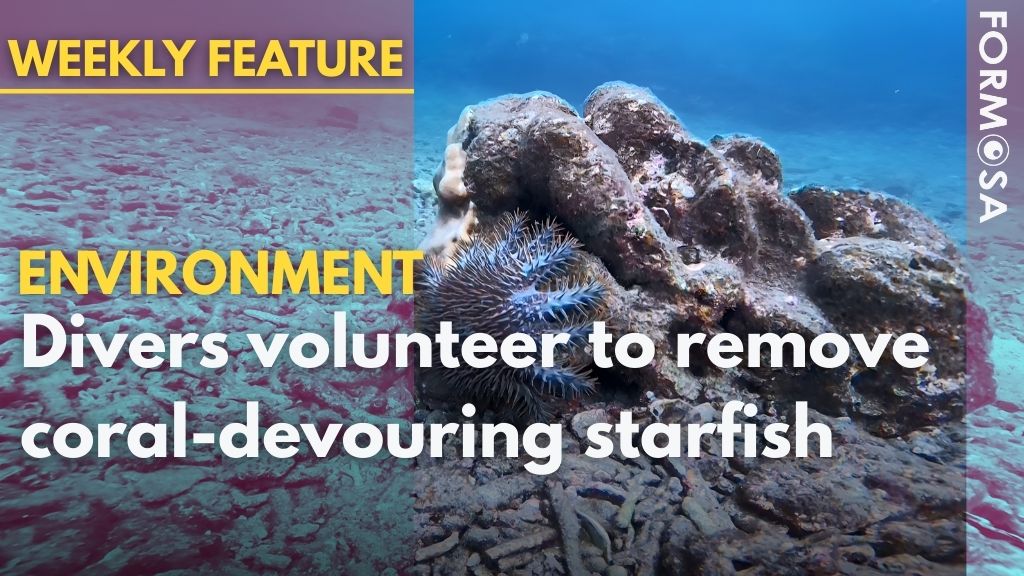
Volunteers in Penghu remove coral-devouring starfish to save precious reefs
2025-11-07
A starfish outbreak is threatening to destroy Penghu’s beautiful coral reefs. This year, the number of crown-of-thorns starfish exploded so much so, that the population is already up to 20 times bigger than the threshold for the amount of living corals to stay constant. To save the corals, local volunteers are taking to removing the starfish one-by-one underwater. However, local government officials say there has to be a long-term solution. Our weekly special report.
This is Penghu’s southernmost island of Qimei. Following in the footsteps of local snorkeling coaches, we’re at Yueli Bay. It’s also the earliest port for local fishermen. The waters here are quite calm, attributable to the inward, crescent-shaped curvature of the bay. It’s also the only water recreation zone on Qimei.
Chan Deng-kai
Snorkel operator on Qimei
This is the Wuoniu area of Yueli Bay. Usually when we do tours, we enter the waters from here. This is also where you can find our most beautiful purple corals, which we call the lavender corals.
The purple staghorn coral fields are popularly referred to as “lavender forest” and attract numerous visitors to snorkel every year. According to the Taiwanese Coral Reef Society, the area boasts a healthy coral coverage rate of 70.5%. However, starting from May this year, an organism with multiple arms and completely covered in spines is threatening the area’s coral population.
The coaches are ready with full diving gear, tongs and carriers to capture the unwanted creatures.
Chan Deng-kai
Snorkel operator on Qimei
In the past we would only see single digits of them. But this year we’ve already caught 56.
They’re removing the crown-of-thorns starfish hiding in the reefs. The crown-of-thorns starfish preys on live corals and could even kill entire colonies.
Hernyi Hsieh
Penghu Fishery Research Center
The starfish we normally speak of has five legs, but the crown-of-thorns starfish’s number of legs is way more than that. Its legs are covered in many sharp spines, which are filled with toxin glands. So when a human or organism comes into contact with it, that could result in great harm.
Jeng Ming-Shiou
Academia Sinica Biodiversity Research Center
Someone had their whole finger sore for three months and really swollen. Another one of my colleagues got three fingers stung. In his case, he still felt a throbbing pain after a year and a half. So it’s a protein neurotoxin that stays inside.
The crown-of-thorns starfish has always existed off Qimei, so why are people hunting them all of a sudden now?
Chan Deng-kai
Snorkel operator on Qimei
If their population suddenly explodes—and they reproduce very quickly—if there’s an outbreak, they would quickly devour the corals and may even wipe out corals.
Chan Deng-kai has done watersports for over 18 years, and he often gives snorkeling tours for visitors to admire the corals. He didn’t know much about the crown-of-thorns starfish, except that they were venomous. But now he’s forced to acknowledge their existence, because there are simply so many.
Lu Chi-chun
Qimei Township head
These crown-of-thorns starfish were caught in May and June this year by volunteer divers. Look, they’ve caught so many, an entire bucketful of crown-of-thorns starfish.
The head of Qimei Township, Lu Chi-chun says it’s snorkel operators that first discovered the outbreak. After calculations, it’s estimated that there are almost 250 starfish per hectare, way above the 10 to 15 threshold for the coral population to stay sustainable.
Lu Chi-chun
Qimei Township head
The entire Yueli Bay area, from the offshore to the open sea, is covered in coral. That’s why we’re worried about the crown-of-thorns starfish. They release spawns in the billions, which is terrifying. That’s why we’re concerned. If the crown-of-thorns starfish grows and matures, it could cause a lot of damage to our coral. This is why many of us are concerned, because the corals under the sea in Qimei are the most beautiful.
The high density of starfish at the bottom of the sea is a terrifying sight to behold. This was taken off Pratas Island, the area with the highest crown-of-thorns starfish population under Taiwan’s administration. Academia Sininca researcher Jeng Ming-Shiou recorded this starfish outbreak in April this year.
Jeng Ming-Shiou
Academia Sinica Biodiversity Research Center
What we saw was really bleak. After the crown-of-thorns starfish ravaged the area, the number of fish decreased, and so did the number of invertebrates. It’s like a habitat, a forest after a fire. It’s basically a coral graveyard, and the biodiversity was just gone. That’s why it’s so urgent, because it’s really frightening. If you’re not careful and if you don’t remove them, they’ll gobble up all the corals. The juvenile starfish were carried over by the currents, so it’s really frightening how they’re being transported everywhere. They’ll settle down anywhere nice.
Jeng had cautioned that the outbreak off Pratas Island would eventually affect the waters around Taiwan, and he was right. Later, another outbreak occurred off Qimei, more than 400km away. Every year, the starfish can release 200 to 300 million spawns. They are then transported all over by ocean currents. Even if only 1% were to survive, that number would still be in the millions.
It takes professional divers to help eradicate the outbreak. But it’s an arduous effort. They must spot the starfish with their naked eye underwater, then remove them individually with tongs. Additionally, they can only work during low tide.
Chen Chung-hsing
Penghu water recreation operators’ association
We must conduct searches. What’s more burdensome now is that the starfish is too scattered, but we must conduct searches. So our association began making plans to get funds for the searches. Every time it costs a whopping NT$40,000 to NT$50,000, but it has to be done.
The competent authority for this issue would be the Ocean Conservation Administration, but it’s a multi-step process to get approval and financing from the central government. Later on, the tendering process would also take some time. Therefore, Penghu County Council Speaker Chen Yu-jen forked out NT$100,000 from his own pocket to raise awareness. Other businesses have also pitched in by offering NT$300 for every starfish caught.
Chen Yu-jen
Penghu County Council speaker
There’s a lot of bureaucracy. The central government’s Ocean Affairs Council and the local Penghu County Government are still in talks. Soon after I though the issue was simply too urgent, that I had to join the volunteers.
Chu Shih-pei
PR manager at distributing company
We make regular annual donations to National Penghu University of Science and Technology. Then university then entrust local NGOs to help eradicate the crown-of-thorns starfish.
But it’s not enough to throw money at eradication. There has to be a long-term monitoring system.
Lu Chi-chun
Qimei Township head
Stretching the chain of islands starting fom Hua Islet to Qimei, Xiyuping Islet, Dongyuping Islet and Dongji Island, or even the entire sea around Penghu, anywhere with corals: we hope that relevant authorities can conduct underwater investigations and long-term monitoring to prevent the issue right from the start.
The crown-of-thorns starfish does have natural predators: the Triton’s trumpet and the humphead wrasse. The former is a large sea snail that preys on the mature starfish.
The Triton’s trumpet is mainly found near coral reefs and feeds on the crown-of-thorns starfish. However, they’re quite rarely seen in the wild now. That’s because its shell is highly sought-after and often made into decorative objects. It’s also used as a ceremonial tool in Tibetan Buddhism. Since 2010, Penghu has banned the collection of tritons, but poaching cases are still reported every now and then.
Chang Hung-an
Penghu agriculture and fisheries department
There’s one case each last year and the year before. They caught them with fishing net intentionally or not, and sold them at the fish market. But actually, some fishers rarely see this thing, so they probably didn’t know that the county government had announced banning the collection of tritons.
To make sure the Triton’s trumpet doesn’t go extinct, the Ministry of Agriculture is also trying to revive the population and conducting research at the Penghu Fishery Research Center, hoping to successfully breed the sea snail.
Hernyi Hsieh
Penghu Fishery Research Center
We know around when it will lay eggs every year, and we can also get the fertilized eggs and the juvenile sea snails. But we still can’t completely figure out what it feeds on in the winter.
Unfortunately, there still isn’t a successful breeding program after 14 years. It’s because a new feed can only be trialed once a year, and the researchers are still figuring out how to ensure the juveniles successfully mature.
Hernyi Hsieh
Penghu Fishery Research Center
This year we’re giving them crown-of-thorns starfish. Whether that will help the development of reproductive glands, improve the quality of eggs, ensure that juveniles mature and undergo metamorphosis and help our program succeed, or at least make a breakthrough, it might be possible.
The starfish population only went out of control due to human causes. An increased amount of nutritional salts from waste water, overharvesting of natural predators and rising sea water temperatures due to climate change—all these factors created conditions for the crown-of-thorns starfish to thrive.
Hu Chun-chieh
Penghu University of Science and Technology
Coral reefs are very important to Penghu, whether for the fishing industry for creating a habitat for fish or for tourism in terms of snorkeling or diving to observe the coral reefs and tropical fish. Therefore we place great importance on coral reeds and will find ways to bring down the starfish population to a controllable level.
The idea that the starfish is turning Penghu’s beautiful coral reefs into a wasteland is terrifying, not just for aesthetic reasons but also for environmentalism.
For more Taiwan news, tune in:
Mon to Fri at 9:30 pm on Channel 152
Tue to Sat at 1 am on Channel 53
#tropical #sea #ocean #coralreef #starfish
澎湖七美海底"夢幻薰衣草美景" 出現"珊瑚殺手"肆虐
2025-11-07
在澎湖七美島海底,有一片紫色珊瑚構成的薰衣草森林,如夢似幻的美景,是許多潛水客心中的秘境,然而,這片美麗生態正歷經一場浩劫。因為一種名為棘冠海星的珊瑚殺手正大爆發,它長相奇特,而且全身佈滿毒刺,所到之處就像蝗蟲過境,把珊瑚礁啃食得一乾二淨。為了挽救珍貴的海洋生態,當地志工潛入海中,徒手拿著長夾和籃子,努力清除每一隻棘冠海星,也有民間企業也伸出援手,以每隻三百元的價格收購,希望能號召更多人,加入這場珊瑚保衛戰。請看民視異言堂記者吳永淳、游文章,來自離島澎湖的第一手報導。
這裡是澎湖最南端的島嶼,七美島,跟著潛水教練們的腳步,我們來到𩵺鯉灣,這裡是天然形成的海灣,是七美漁民最早的港口,由於海灣呈現弦月型,風浪平靜,現在也是七美唯一的戲水區域。
[[七美浮潛業者 詹登凱]]
“這個地方叫𩵺鯉灣臥牛區,一般帶客的話,就是會從這邊下去,也是我們目前最漂亮的紫色珊瑚,就是我們講的薰衣草珊瑚”
這片紫色的珊瑚礁,被潛水客稱為薰衣草森林,每年吸引眾多遊客造訪,根據台灣珊瑚學會的調查,𩵺鯉灣健康的珊瑚覆蓋率達70.5%,但今年五月,這裡卻出現全身長滿尖刺,又有很多觸角的生物。
教練們穿戴好潛水裝備,還帶著長夾與籃子,他們要找尋出現在這裡的不速之客。
[[七美浮潛業者 詹登凱]]
“以前的話,我們看到大概都是個位數,今年的話,像我們本身就已經抓56隻了”
他們移除的是躲在珊湖礁裡的「棘冠海星」,因為專吃珊瑚,還被稱為珊瑚殺手。
[[水試所澎湖研究中心研究員 謝恆毅]]
“一般我們講的海星是五支腳,可是棘冠海星腳的數目,就遠遠超過這個數字,牠的腕足上面有很多尖銳的棘刺,裡面都有毒腺分布,所以人或生物只要碰觸到牠,很有可能會帶來很大的傷害”
[[中研院生物多樣性研究中心執行長 鄭明修]]
“有一個人被弄到整個手指頭,痛三個月而且腫到不行,然後我的另外一個同事,被刺到三根,他是一年半,這裡手都還有抽痛的感覺,所以它是蛋白神經毒,會留在裡面”
其實七美本來就有棘冠海星,但為何現在人們想要撲滅牠。
[[七美浮潛業者 詹登凱]]
“如果說牠們數量一爆發,而且牠們繁殖能力非常的快,如果說讓牠爆發出來的話,吃珊瑚的速度會非常快,珊瑚可能會被牠們吃完”
詹登凱從事水域活動超過18年,時常帶遊客浮潛看珊瑚,原本對棘冠海星沒概念,只知道有毒不能碰,現在看到牠卻相當頭痛,因為數量多得驚人。
[[澎湖縣七美鄉鄉長 呂啟俊]]
“這個棘冠海星是今年五、六月,海洋志工他們下去撿的,你看,他們撿了這麼多,撿了一整桶的棘冠海星”
七美鄉長呂啟俊說,當時就是浮潛業者,發現棘冠海星大量出現,經測量換算,每公頃有將近250隻,已超出健康珊瑚礁,每公頃能承受10到15隻的安全範圍。
[[澎湖縣七美鄉鄉長 呂啟俊]]
“(𩵺鯉灣)從近海到外海,整個區塊裡面都是珊瑚,所以我們才會緊張說,萬一棘冠海星的繁殖,牠繁殖一次是算億的 ,很可怕,所以我們才會重視說,棘冠海星萬一成長,牠在孵化的當中,造成很多,會危害到我們的珊瑚,這才引起我們很多人的關切,因為七美海底的珊瑚是最漂亮的”
海底密密麻麻的棘冠海星,讓人看了頭皮發麻,這裡是台灣周邊海域中,棘冠海星數量最多的地方東沙群島,中研院研究員鄭明修,今年四月在這裡捕捉到,棘冠海星「大爆發」的畫面。
[[中研院生物多樣性研究中心執行長 鄭明修]]
“我們看到真的很淒慘,整個被棘冠海星吃過以後,包括魚類變少,無脊椎什麼都變少,因為就好像一個棲地,像森林被火燒過一樣,就珊瑚墳場,生物的多樣性就沒有了,所以為什麼很急,就是很可怕,你不防範,不移除,牠就把你吃光,一直吃。(棘冠海星)的幼生就這樣飄過來,所以整個洋流是很可怕的,帶牠四處漂散,只要有好的地方就著下來”
鄭明修當時就曾預警,東沙群島棘冠海星大爆發,會影響台灣周邊海域,結果一語成讖,相隔400多公里之遠的澎湖七美就中標,因為棘冠海星,每年可以生產兩到三億顆的卵,隨著洋流漂散,若存活率只有1%,也能高達百萬隻。
想要解決七美棘冠海星大爆發的問題,得靠專業的潛水員,只不過 ,他們要用肉眼搜尋棘冠海星,再用長夾把牠夾起,不僅耗體力,也受限於退潮時才能作業。
[[澎湖縣水域遊憩公會理事長 陳中行]]
“我們必須要做巡查,現在比較麻煩的是,牠(棘冠海星)分散得太廣,我們必須要有巡查動作,所以我們公會開始規劃,如何再去籌措經費來做巡查的動作,一次四,五萬就燒掉,但是似乎不得不做”
海洋業務歸海保署權責,但中央經費撥補要走多道程序,還要公開招標,曠日廢時,因此澎湖縣議長陳毓仁,自掏腰包十萬元響應,也有民間企業主動捐款,以每隻三百元的價格,收購棘冠海星。
[[澎湖縣議長 陳毓仁]]
“公部門很多流程要走,這到底屬於中央海委會的事情,還是地方澎湖縣政府的事情,兩方面在溝通中,後來我覺得刻不容緩,我趕快一起加入志工行列”
[[通路商公關經理 朱詩蓓]]
“我們每年固定有捐款給澎科大,所以澎科大這邊,幫我們委託當地的NGO業者,來協助清除棘冠海星的部分”
但就算有錢,也無法避免棘冠海星爆發,必須要有一套長期的監控機制。
[[澎湖縣七美鄉鄉長 呂啟俊]]
“從花嶼、七美、西嶼坪、東嶼坪,到東吉這整個海島鏈,甚至延伸到整個澎湖海域,有珊湖的地方,希望有關單位能隨時做水下調查,長期監控,把問題在於防範於未然”
事實上,棘冠海星有天敵,是大法螺與蘇眉魚,尤其大法螺專吃成年的棘冠海星。
大法螺主要棲息在珊瑚礁區域,是以棘冠海星為食,只不過現在野外難得一見,主要是大法螺清洗後相當漂亮,常被人類製成飾品販售,早期還被當作法器使用,因此遭到大量採捕,雖然澎湖縣政府,已於2010年公告禁捕,但至今仍不時查緝到非法捕捉的案件。
[[澎湖縣府農漁局祕書 張宏安]]
“像去年跟前年各有一案,他們就是漁網具捕撈,勾到,或是怎麼樣誤捕到漁市場,其實有些漁民,他們也少見這個東西,他們也不知道,這個是縣府有公告禁止採捕的”
為了不讓大法螺絕跡,農業部也積極復育,在澎湖水試所研究,希望能以人工繁殖技術培育大法螺。
[[水試所澎湖研究中心研究員 謝恆毅]]
“我們每年都能夠掌握牠產卵的時間,也能夠獲至這些受精卵,孵化出來的幼生,可是到底牠冬天要吃什麼樣的餌料,摸索到現在,還沒有辦法非常有把握地找到”
可惜的是,培育了14年還沒成功,問題就出在餌料一年只能調整一次,且要不斷地嘗試,才有機會讓牠從幼生,順利變成大法螺。
[[水試所澎湖研究中心研究員 謝恆毅]]
“今年有可能牠就吃這些棘冠海星,牠的生殖線發育,是不是會比較完整,對於後來產出來的卵質是不是會有改善,會不會對於後續幼生飼養到變態,能夠幫助我們成功,或是今年有突破性成功的結果,也說不定”
棘冠海星本是海洋界的生物,之所以數量多到失控,都是因為人類貪圖私利,污水排放增加海水中的營養鹽、過度捕撈天敵、氣候變遷導致海水溫度上升,為棘冠海星提供了絕佳的生長環境。
[[澎科大海洋遊憩系教授 胡俊傑]]
“珊瑚礁對澎湖是很重要的,不管是從漁業的角度,因為牠是魚重要的棲地,或者是觀光的角度,大家會去浮潛或潛水,看的就是珊瑚礁跟珊瑚礁的魚類,所以我們非常重視,也勢必要想辦法,把棘冠海星的密度,降到可控的程度”
如今,棘冠海星,反成了海洋生態的殺手,最終反噬的是人類自己,當美麗的珊湖生態不再,當魚群消失,海洋還剩下什麼。
更多新聞內容,請鎖定:
民視台灣台(152頻道)週一至週五晚上9:30
民視新聞台(53頻道)週二至週六凌晨1:00
Related News