Interview with ‘Rosemead’s’ screenwriter Marilyn Fu
Interview with ‘Rosemead’s’ screenwriter Marilyn Fu
2025-11-21
Tonight, we take a closer look at “Rosemead,” a new film written by Taiwanese-American screenwriter Marilyn Fu. Inspired by a true story from a Los Angeles Times article, the movie explores themes of motherhood, mental illness and the immigrant experience. “Rosemead” has already been acclaimed at various film festivals and has earned Fu a Golden Horse Award nomination for best adapted screenplay, ahead of the awards ceremony this Saturday. FTV reporter Stephany Yang sat down with Fu to find out more.
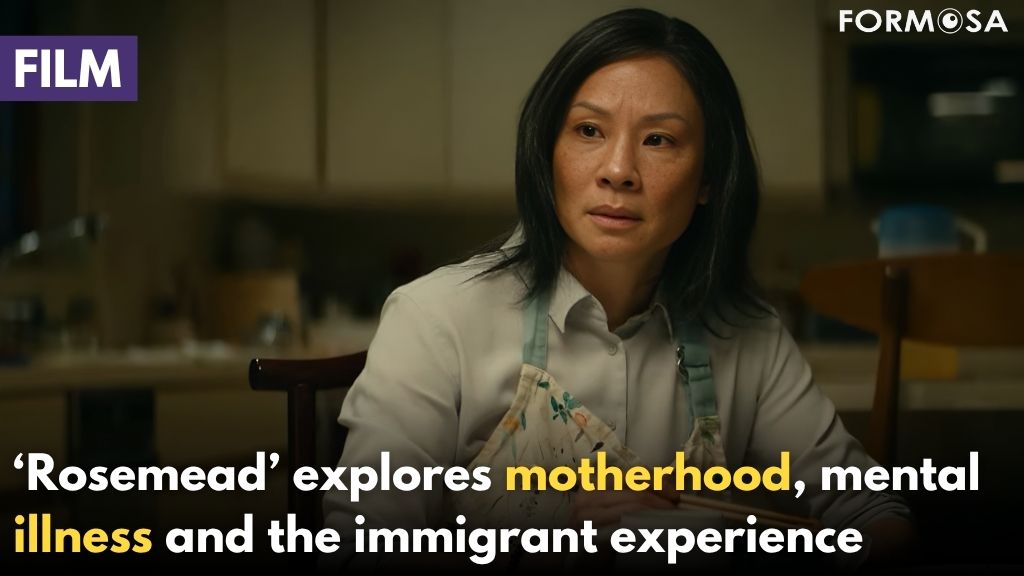
The new film “Rosemead” tells the story of Irene, a terminally ill Chinese immigrant mother in California’s San Gabriel Valley. She is portrayed by Lucy Liu. She uncovers her schizophrenic teenage son’s obsession with mass shootings and finds ways to protect her son from hurting others. The film was inspired by a true story in an award-winning Los Angeles Times article by Frank Shyong.
Marilyn Fu
Screenwriter
So, the whole movie is what she is able to do to protect her son and the limits for her love. It turns out there are no limits to her love. Rosemead is based on a true story that happened in 2015. An LA Times journalist Frank Shyong knew about the story and was able through his persistence to gain the trust of the living people and created this article that has been so moving. The article came to me and I couldn’t put it down. I was at a point in my life where I really wanted to write a starring role for an Asian woman. Lucy Liu was interested in playing Irene and really embraced the role. It was like the stars aligned.
For Fu, the project was deeply personal. She began writing while pregnant with twin boys and the themes of motherhood resonated strongly.
Marilyn Fu
Screenwriter
When I first wrote this script, I was pregnant with my sons. I didn’t have much hands-on experience with being a mother. I think that a lot of what I put in the script was from my own mom and her relationship with me and my family. Now, when I watch the film, I see so many more things that break my heart because now they really resonate now that my sons are six years old. There is one part of the Chinese translation between Irene and Joe, between and mother and son. It is a moment when Irene says: “Wo teng ni.” When I think about translation, I know there is “teng” and there is “ai.” There isn’t really an English translation for “teng.” It has a specific meaning that is specific to our language. The root of means pain. When I discovered that it is a love that makes you hurt perhaps physically, then that made me think of motherhood in a whole other way and look at the movie differently.
The film took eight years to make, and tackles sensitive subjects and themes such as mental illness, the immigrant struggle and family. Fu says accuracy and empathy were essential in her writing process.
Marilyn Fu
Screenwriter
With “Rosemead,” it is based on a true story. It is a difficult story. It is very challenging. The people involved, Irene and Joe, along with their families really suffered through the tragedy. For me, my responsibility is also to them. I don’t want to hurt any of the living people. I want to be able to tell the story that elevates and brings it to an audience that can have an impact. I am sort of an investigator. I am going through Frank Shyong’s original article and cherry-picking the details of these people and trying to draw a portrait of them.
“Rosemead” has already been recognized at film festivals and earned Fu a Golden Horse Award nomination. She says the film’s themes resonate far beyond the Asian American community.
Marilyn Fu
Screenwriter
Our experience of taking around to film festivals has been very emotional. What we found is that as we were telling the story about a Chinese immigrant family and Asian Americans living in the San Gabriel Valley, we found that the themes really crossed cultural borders. That there were many people who understood this film. Whether they are caregivers who are taking care of somebody with mental illness or if they are someone that has something that they are dealing with throughout their whole lives. They wanted to talk to us after the screening. They wanted to express what they were going through and just connect.
Fu hopes “Rosemead” will spark a broader movement—expanding Asian representation in cinema while confronting stigmatized issues such as mental illness and the immigrant experience.
Marilyn Fu
Screenwriter
A lot of the people together, even on the filmmaking side of the movie, has experiencing of being unable to talk about sort of experiences their family and experiences with mental illness. We want with the film to be able to draw people out. We want the film to be able to draw people out to start these conversations, to expel this undercurrent of shame that might exist so that there is more healing that can exist.
Fu also hopes audiences will not only be moved by the film, but also inspired to share their own stories.
For more Taiwan news, tune in:
Mon to Fri at 9:30 pm on Channel 152
Tue to Sat at 1 am on Channel 53
#rosemead #MarilynFu #screenwriter #goldenhorseaward #金馬獎 #傅世晏 #柔似蜜
電影"柔似蜜"入圍金馬獎"最佳改編劇本" 編劇傅世晏獨家專訪
2025-11-21
金馬獎即將在周六舉行。今天帶大家來看看在金馬獎入圍"最佳改編劇本" 的電影"柔似蜜"。這部是由台裔美籍編劇傅世晏改編,由劉玉玲主演。電影靈感來自"洛杉磯時報"的一篇真實故事報導,探討家庭、精神疾病與移民經驗等議題,上映後引起不少迴響。
電影"柔似蜜",華裔女星劉玉玲飾演一個住在南加州聖蓋博谷,經營印刷小店的華裔移民愛琳。在丈夫突患腦瘤去世後,愛琳也被診斷出癌末,生命只剩幾個月,患有精神分裂症的17歲兒子喬,卻沉迷於電視新聞中的校園槍擊案,讓她心力交瘁。
[[編劇 傅世晏]]
"整部電影講述的是她為了保護兒子所能做出的一切,以及她愛的界線。最終,她的愛是沒有界限的。 柔似蜜改編自2015年發生的真實故事。洛杉磯時報記者Frank Shyong挖掘了這個故事,憑藉他的堅持不懈,贏得了在世當事人的信任,並撰寫了這篇感人至深的文章。這篇文章送到我手中,我立刻就愛不釋手。當時,我正想為一位亞裔女性創作一個主角。劉玉玲對飾演愛琳這個角色很感興趣,並且全心投入其中。一切都像是命中註定。"
編劇傅世晏改編真實事件,而且當時剛好懷孕,母愛的主題深深觸動了她。
[[編劇 傅世晏]]
"我最初寫這個劇本的時候,正懷孕,那時我並沒有太多為人母的經驗。劇本裡很多東西都取材自我的母親,以及她與我和家人的關係。現在,當我再看這部電影時,我發現很多情節都讓我心碎,因為現在我的兒子都六歲了,這些情節才真正引起了我的共鳴。愛琳和喬之間,母子之間,有一種中文翻譯的藝術。愛琳說「我疼你」的時候,我知道這裡有「疼」和「愛」兩個字。英文裡並沒有一個完全對應的「疼」的翻譯。它在我們語言中有著特定的意義。它的字根是「痛」。當我發現它指的是一種會讓你感到痛苦的愛,也許是身體上的痛苦時,我開始用一種全新的視角去思考母愛,也用另一種方式去看待這部電影。"
這部電影耗時八年製作完成,探討了精神疾病、移民困境和家庭等敏感話題。傅世晏表示,在她的劇本創作過程中,準確性和同理心至關重要。
[[編劇 傅世晏]]
“柔似蜜是根據真實故事改編的,這是一個令人心碎的故事,極具挑戰性。故事中的人物,愛琳和喬,以及他們的家人,都經歷了這場悲劇帶來的痛苦。對我來說,我也肩負著對他們的責任。我不想傷害任何活著的人。我希望能夠講述一個具有啟發意義的故事,讓觀眾能夠感同身受。我有點像個調查員,正在仔細研讀Frank Shyong’s 的原文,從中挑選出人物的細節,試圖勾勒出他們的形象。"
電影已經在三個國際影展得獎,如今又入圍金馬獎"最佳改編劇本"。她表示,這部電影的主題遠不僅限於亞裔美國人社群,更能引起其他族群的共鳴。
[[編劇 傅世晏]]
"我們帶著影片參加影展的經驗非常令人感動。我們發現,當我們講述一個中國移民家庭和亞裔美國人在聖蓋博谷的故事時,電影的主題真正跨越了文化界限。很多人都能理解這部電影。無論是照顧精神疾病患者的照顧者,或是那些一生都在與各種困境作鬥爭的人,他們都想在放映結束後與我們交流。他們想傾訴自己的經歷,渴望建立連結。"
傅世晏希望電影能掀起更大的對話──讓亞洲人在電影中的呈現更多元,也讓精神疾病與移民經驗等的議題被看見。
[[編劇 傅世晏]]
"甚至包括電影製作團隊的成員,是他們都曾有過難以啟齒的經歷,例如無法與家人談論自己的遭遇以及與精神疾病抗爭的經歷。我們希望這部電影能引導人們敞開心扉,展開這些對話,消除可能的羞恥感,從而促進更多的療癒。"
傅世晏也希望觀眾被這部電影感動之外,也能受到啟發,分享自己的故事。
更多新聞內容,請鎖定:
民視台灣台(152頻道)週一至週五晚上9:30
民視新聞台(53頻道)週二至週六凌晨1:00
Related News