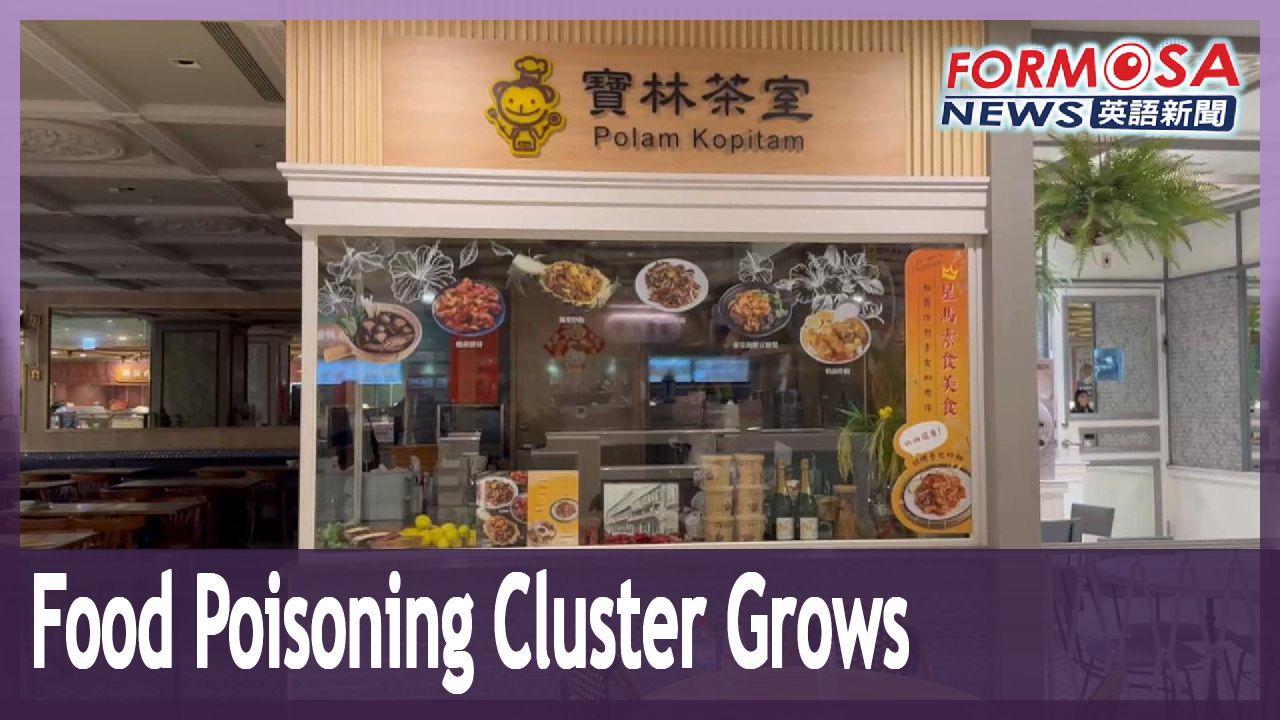
Bongkrekic acid to blame for death of two people in food poisoning cluster
Bongkrekic acid to blame for death of two people in food poisoning cluster
2024-03-29
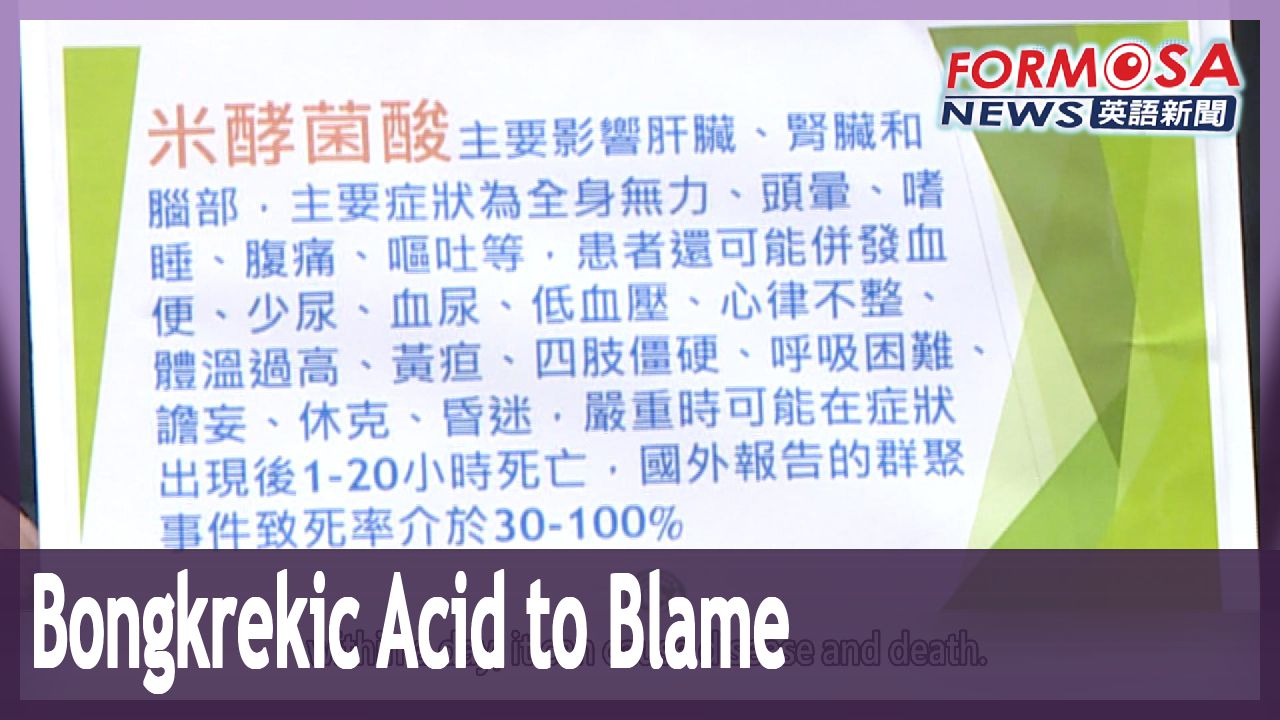
The Ministry of Health has confirmed that bongkrekic acid is to blame for the death of the two diners in the food poisoning cluster in Taipei. The acid can have a mortality rate of between 30% and 100%. It is produced by bacteria that grow in foods rich in fatty acids such as coconuts and corn.
Ho Mei-shang
Contagious disease expert
The top priority now is to find where the bongkrekic acid came from. From a macro historical perspective, this is the first case of its kind in Taiwan. We shouldn’t let the bacteria enter our plant ecosystems.
Speaking on a radio program, infectious disease expert Ho Mei-shang says that, although the bongkrekic acid toxin can’t be spread from person to person, the bacteria that produces it can grow in the soil under the right conditions.
Ho Mei-shang
Contagious disease expert
The bacteria only infects plants. It doesn’t infect people. But it can grow in humid environments. It seems that the bacteria has already established itself in China. We hope that the bacteria was found in imported products, and not in Taiwan-made products.
Experts from the Ministry of Health and Welfare say bongkrekic acid is a relatively rare toxin produced by the Burkholderia gladioli bacteria, which thrives in foods rich in fatty acids such as coconuts and corn. The toxin can cause severe illness in humans.
Adonis Chiang (March 28)
NTU Graduate Institute of Toxicology
In severe cases, all the cells in the body suddenly lose energy and shut down. So severe symptoms include liver failure and metabolic acidosis. The toxin can’t be metabolized so it gets into the patient’s head, heart and muscles. They become paralyzed. In just a few hours, within a day, it can cause disease and death. The literature says its mortality rate ranges from 30% to 100%.
Chiang Shou-shan
Nephrologist
The bacteria is very picky, so it doesn’t easily cause food poisoning. If it does, it’s because you have had major problems in your food management.
The Food and Drug Administration says that washing or cooking do not get rid of bongkrekic acid already present in food. To prevent the bacteria from growing in ingredients is to make sure starchy fermented foods are stored properly. With the first case of bongkrekic poisoning, Taiwan is trying to learn lessons to prevent it from happening again.
For more Taiwan news, tune in:
Sun to Fri at 9:30 pm on Channel 152
Tue to Sat at 1 am on Channel 53
米酵菌酸致死率最高百分百 何美鄉:勿進植物生態
2024-03-29
寶林茶室食物中毒案,衛福部找出元兇「米酵菌酸」,現在第二名死者也驗出「米酵菌酸」,專家指出,這是相當罕見的毒素,兇猛程度讓死亡率最高可達100%,曾參與抗SARS行動的中研院博士何美鄉今天上廣播節目,呼籲要將米酵菌酸在控制一定範圍,不要進到植物生態。
[[台灣流行病學專家 何美鄉]]
“現階段當務之急就是趕快找到(米酵菌酸)是來自哪裡,宏觀的歷史角度來看,這是台灣第一個病例,不要變成進入我們的植物生態”
專家何美鄉上廣播節目指出,寶林中毒案元凶「米酵菌酸」,雖不至於人傳人,但只要逮到機會,就會在土壤生長。
[[台灣流行病學專家 何美鄉]]
“(米酵菌酸)它本來就是一個植物的病菌,不是人的病菌,只要是在一個潮濕的環境,它應該是很容易落地生根,看起來它在中國已經落地生根,我們希望找到的是某進口食物,不是台灣自產的”
衛福部專家指出,米酵菌酸是罕見毒素,是從唐蒼蒲伯克氏菌產生,喜愛富含脂肪酸食物,像是椰子和玉米,而且症狀十分兇猛。
[[台大毒理學研究所教授 姜至剛(3.28)]]
“嚴重的後果,就是所有身體的細胞,瞬間就失去能量,沒辦法運作之下,所以每個病患,我們看到的嚴重的,所謂的肝臟的衰竭,代謝性的酸中毒,因為沒有辦法代謝,所以全身呢腦部,心臟,肌肉全部都整個癱瘓掉,數個小時到一天內,就造成了死亡、發病,整個死亡率在過去的文獻裡面,從30%到100%”
[[腎臟科醫師 江守山]]
“(唐蒼蒲伯克氏菌)是很挑剔的細菌,所以它不是那麼容易產生食物中毒,一定是你的管控出了很大的問題”
食藥署表示,米酵菌酸不因洗滌或烹飪被破壞,關鍵在預防這類澱粉發酵食品,不要長期存放不當環境,台灣史上頭一遭米酵菌酸中毒案件,各界都想從慘痛經驗中找出答案。
更多新聞內容,請鎖定:
民視台灣台(152頻道)週日至週五晚上9:30
民視新聞台(53頻道)週二至週六凌晨1:00
Related News