Prescription reform to launch in October for dentist clinics
Prescription reform to launch in October for dentist clinics
2024-07-29
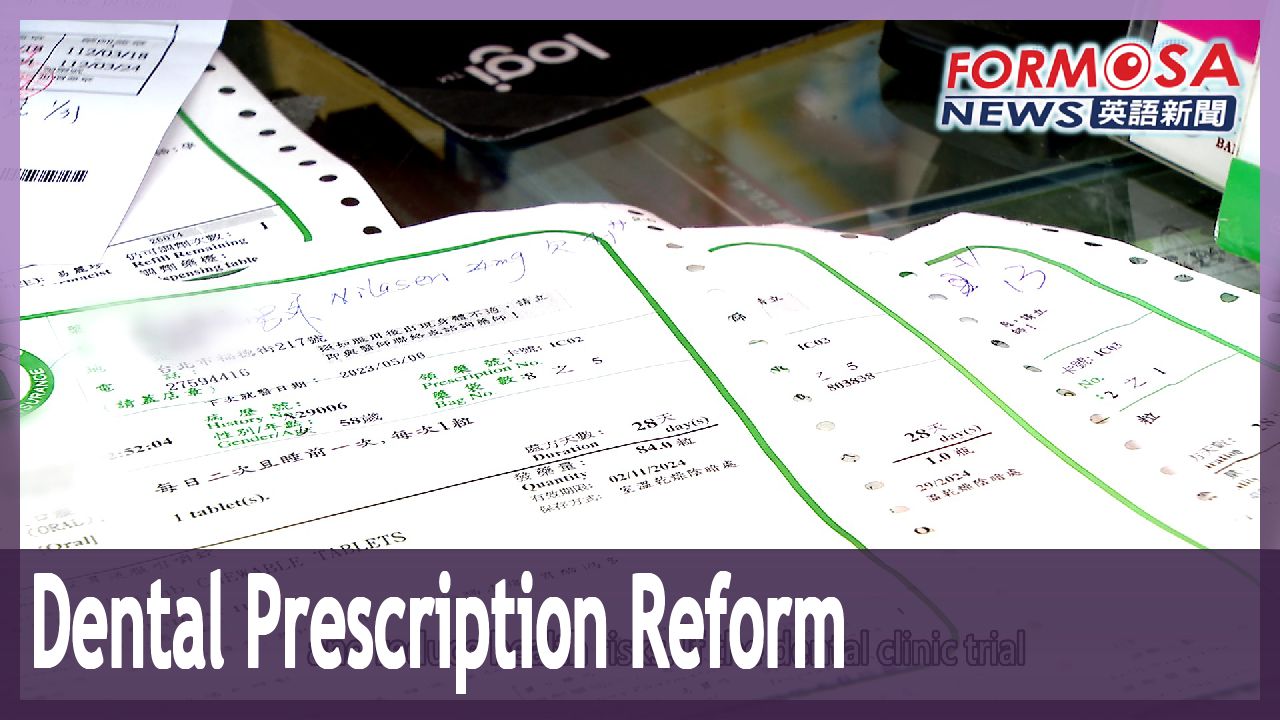
Drug prescriptions sometimes include a doctor’s note saying “Do Not Substitute.” That means pharmacies can’t switch out the brand-name medications mentioned for generic drugs with the same active ingredients. Starting October, dentists will have to give a justification for the note. Failing to do so will render the instructions invalid. And starting next April, dentists won’t be allowed to specify brand-name drugs, only active ingredients. This policy may later be expanded to other medical specialists.
A woman hands over her prescription but leaves the pharmacy empty-handed. That’s because her prescription is labeled “Do Not Substitute,” meaning that the drug listed can’t be replaced with equivalent medications. To save patients a trip in vain, the National Health Insurance Administration will require dentists to explain their reasoning for not allowing substitutes, starting in October. If no reason is provided, the pharmacy will be permitted to dispense generics.
Chiang Hsi-jen
Taiwan Dental Association
A cancer patient who has undergone surgery may need specific drugs. So in that kind of scenario, it might not possible to substitute with another drug. But most prescriptions written by clinics are for anti-inflammatory drugs or pain relievers, which can usually be substituted.
Member of public
If the effect of the drugs is the same, I think it should be OK.
It remains to be seen whether the policy can work for chronic patients, who must take medications regularly. In the policy’s second phase, which starts next April, dental prescriptions may no longer list brand names, only active ingredients.
Liu Lin-yi
National Health Insurance Administration
The policy allows for more flexibility in prescriptions. It can also make it more likely that patients follow doctors’ orders, and reduce the likelihood that they interrupt the treatment, mitigating potential health risks. So this initial trial will roll out for 6,900 dental clinics around Taiwan.
The NHIA hopes the policy will change public attitudes and reduce health risks. If the dental clinic trial is successful, the policy may be expanded to other clinics and hospitals.
For more Taiwan news, tune in:
Sun to Fri at 9:30 pm on Channel 152
Tue to Sat at 1 am on Channel 53
明年4月起 牙醫處方箋不寫"藥品名"改採"成分名"
2024-07-29
處方箋大變革,從10月起,牙醫師開立處方箋時,如在註明藥物"不可替代",必須說明原因。明年4月,處方箋將不再出現藥品名,只剩成分名。牙醫師全國聯合會表示,診所大多用消炎、止痛藥比較好替代,但像醫院的癌症患者大多要指定用藥,恐怕有難度。
民眾拿著處方箋到藥局領藥,卻沒辦法領,因為醫師在處方箋上,標註不能用同成分的藥物替代。為了避免患者四處奔波領藥,健保署規劃,從10月起,牙醫師開藥,如果註明「不可替代」,必須說明原因,沒有說明,就視為可以替代。
[[牙醫師公會全國聯合會理事長 江錫仁]]
“比如說有癌症的患者,他在做些手術,他可能必須要用他指定的藥,所以意願的部分可能就,可能現在目前還沒辦法去做這樣的更換,然後那個診所大部分大概都是一些消炎止痛的,比較可以有替代的。”
[[民眾]]
“效果一樣我是沒差,我覺得是應該是可以接受的。”
新制上路,長期服用固定藥物的慢性病患者,能不能接受恐怕也是問題,不光是這樣,第二階段4月上路,到時候牙醫診所拿藥,不會出現藥品名,只剩成分名。
[[健保署醫務管理組長 劉林義]]
“處方上能夠更有彈性,那從而也可以提高民眾那個醫囑的遵從性,而且也可以減少中斷服藥,對民眾所可能帶來的健康風險。所以我們大概初期會在全國的大概有6900家的牙醫診所,這邊來先行來試辦。”
健保署表示,處方箋變革,希望改變民眾觀念,減少健康風險,至於醫院、診所是否比照辦理,還要看成效再決定。
更多新聞內容,請鎖定:
民視台灣台(152頻道)週日至週五晚上9:30
民視新聞台(53頻道)週二至週六凌晨1:00
Related News