National Museum of History holds currency exhibition
National Museum of History holds currency exhibition
2025-02-07
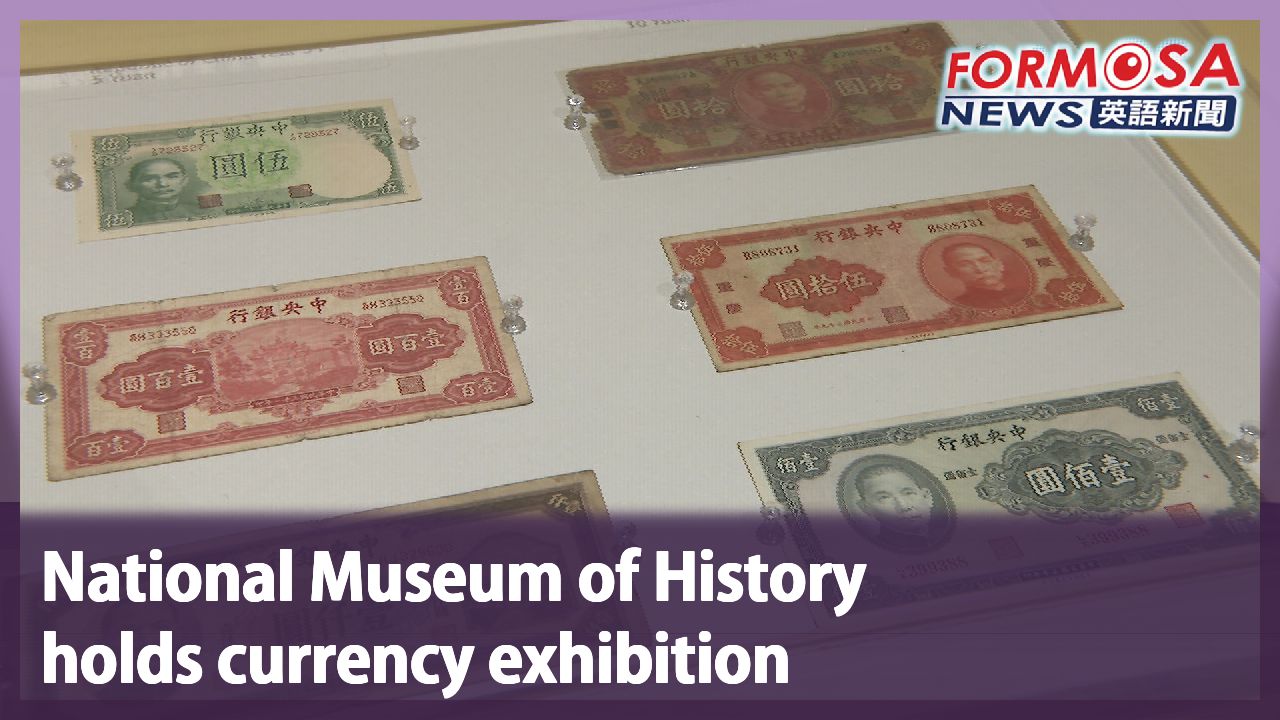
The National Museum of History is holding an exhibition showcasing the museum’s and Central Bank’s collection of currencies dating all the way back to at least the third century BCE. FTV reporter Stephany Yang takes us in for a look!
The earliest currencies in Ancient China were shells because they were durable, portable, and easy to preserve. By the Zhou dynasty, which began in the 11th century BCE, coins were introduced; and by the Qing dynasty some 400 years later, shells were replaced with money. The exhibition showcases currencies throughout history, ranging from pre-Qing dynasty artifacts to modern coins, silver ingots, and banknotes collected by the Central Bank and the National Museum of History.
Kuo Pei-i
National Museum of History
This is one of the important antiquities in our museum. It is a standardized ingot from the Yuan dynasty. On the back is written Yuanbao, which means treasure of the Yuan dynasty. This is a standard type, 50 tael. It weighs 50 tael. The sides will be molded in, and the middle will be indented, which allows them to be stackable, which was convenient for tax collection. This was mainly used in the Yuan the Ming dynasties, and was used all the way until the Qing Dynasty. At that time, paper money was issued for a while. But people were accustomed to using ingots and copper coins. Copper coins were used for small transactions, while ingots were used for large transactions.
The Central Bank’s collection of animal-themed banknotes from Taiwan and other countries are also on display.
Kuo Pei-i
National Museum of History
The Central Bank collects lots of banknotes and coins from all over the world to study their design. This time they have collected all 12 zodiac animal. Abroad, the rabbit is especially popular. Several countries use the rabbit for their banknotes. In addition, the horse is also popular. The most popular zodiac animal coin sets are usually dragon, tiger and horse. These three are especially popular. The bestsellers are usually dragons, tigers and horses.
The National Museum of History is holding a currency exhibition showcasing collections from the National Museum of History and the Central Bank. The exhibition also unveils the minting production processes.
Kuo Pei-i
National Museum of History
We hope to take this opportunity to educate the public about the identification, use and production process of currencies. The main exhibition area has three sections. The first one introduces the coins throughout history, all the way to modern times. The second exhibition area is centered on the zodiac animals. The third area is the interactive area, where banknote stickers are placed, and everyone can use stamps to emboss money cards.
Money makes the world go round. To find out more, head to the National Museum of History by April 6.
For more Taiwan news, tune in:
Sun to Fri at 9:30 pm on Channel 152
Tue to Sat at 1 am on Channel 53
史博館「一圜復始-鈔幣特展」 探討貨幣背後的歷史美學
2025-02-07
國立歷史博物館攜手中央銀行舉行「一圜復始-鈔幣特展」,展出史博館和央行的藏品精華,其歷史最早可追溯到公元前三世紀。一起來看看!
中國古代最早的貨幣是貝殼,因為它們堅固耐用、便於攜帶、易於保存。到公元前11世紀的周朝,鈔幣被引入,約四百年後的秦朝,貝殼被貨幣取代。史博館本次展出珍貴的通貨收藏,包括先秦到現代的各式錢幣、銀幣和鈔票等。
[[史博館展覽組研究助理 郭沛一]]
"這枚就是作為我們館內所謂重要古物的部分,一枚元朝的標準化的元寶,背面就是寫了元寶,就是元朝之寶的意思。這是標準型的50兩、重量50兩,腰部會收塑進去,中間會凹陷,方便收稅,一錠一錠疊起來。這個東西主要在元朝還有明朝,一直用到清朝。當時發行一陣子的紙鈔,但是民間都是習慣用元寶跟銅錢。小額交易用銅錢,大額交易用元寶"
此外,也展出中央銀行的藏品精華,歷年台灣生肖套幣,以及各國動物相關的貨幣。
[[史博館展覽組研究助理 郭沛一]]
"央行也會收集很多世界各國鈔票還有他們的錢幣,來參考他們的美工,所以這次湊出了12生肖,對國外而言,兔子特別受歡迎,兔子有好幾個國家使用到兔子的圖案。另外,馬也受歡迎,生肖套幣買的特別好的生肖通常就是龍、老虎、馬,這三種是賣得特別好的"
國立歷史博物館攜手中央銀行舉辦展覽,展出貨幣精華藏品及鑄幣生產過程。
[[史博館展覽組研究助理 郭沛一]]
"希望藉這個機會向民眾宣導關於一些鈔票辨識、使用,以及了解鈔幣製作流程。 主要展區就是三個部分,第一個介紹歷年的錢幣,一直到現代,第二個展區就是以生肖為核心,第三個區域就是互動區,放置了鈔票大頭貼,大家可以自己動手用壓模,來壓模錢幣卡片"
「一圜復始-鈔幣特展」在國立歷史博物館展至4月6日。
更多新聞內容,請鎖定:
民視台灣台(152頻道)週日至週五晚上9:30
民視新聞台(53頻道)週二至週六凌晨1:00
Related News