Artisan upholds handmade incense craft amid industry decline
Artisan upholds handmade incense craft amid industry decline
2025-07-18
Many people in Taiwan light incense sticks to pray at temples, a tradition that has been practiced for centuries. Chen Chih-ming has been making incense for nearly half a century, using all-natural materials. Consistently developing new products, he recently released tea leaf and coffee-scented incense. Chen continues to bring fresh ideas to this field, which has been declining in recent years.
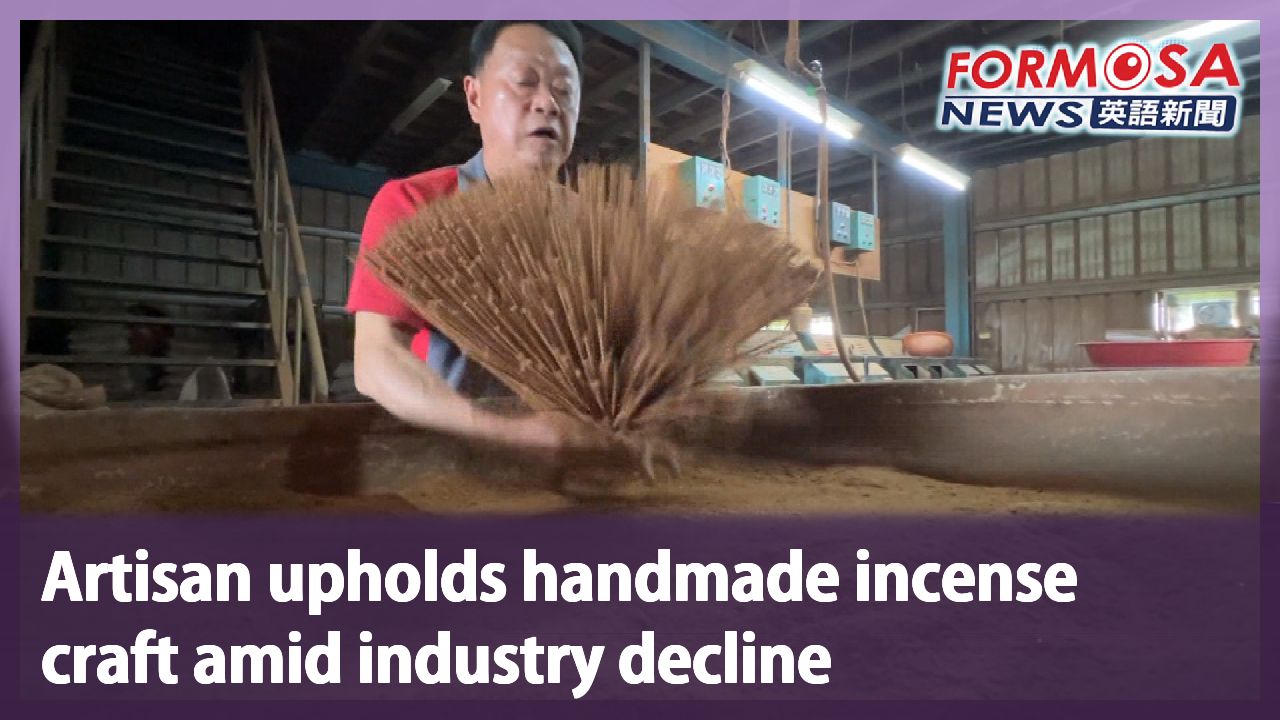
Every day before dawn, Chen Chih-ming starts working at his factory, taking advantage of the cloudless skies. Chen covers bamboo sticks in a special blend of Chinese herbal incense powder, making sure that the incense covers each stick evenly. With decades of experience, Chen is an expert at this.
Chen Chih-ming
Incense maker
Making incense is physical labor.It requires physical work and use of both hands. Both my hands have been injured from this work.
Chen began making incense when he was 13 because his family needed the financial support. After studying this craft with many teachers, he settled down in Yunlin County’sDapi Township, where he has been making incense for almost 50 years. But now, with the rise of environmentalism and the competition of low-price incense from China, Taiwan’s incense industry is facing a crisis. Boldly confronting these challenges, Chen continues to make incense using all-natural materials like tea leaves, jasmine and coffee. An innovator, he is consistently developing new products.
Chen Chih-ming
Incense maker
I researched the scent of hot water being poured over tea leaves when brewing tea, figuring out how to recreate it using incense materials. I wanted to use everyday things from home to make incense that can be lit and used to pray.
Despite the industry’s decline, Chen has remained steadfast. He continues to make incense by hand, preserving traditional methods amid the mechanization of the industry. He hopes to find an apprentice so he can pass on this traditional craft.
For more Taiwan news, tune in:
Mon to Fri at 9:30 pm on Channel 152
Tue to Sat at 1 am on Channel 53
#incense #incensestick #pray #temple #tradition #taiwan #religion #handmade #allnatural
堅持手工製香50年 雲林達人創新開發"茶葉.咖啡味"
2025-07-18
台灣廟宇中信眾持香祈福的傳統,行之有年,在雲林從事製香近半世紀的陳志明,堅持使用天然原料製香,並持續研發創新產品,特別的是,近年研發出茶葉、咖啡等香味的立香、塔香等產品,為逐漸式微的製香產業、注入新生命。
每天凌晨三點多,把握晴朗天氣趕工製香,陳志明將竹枝浸泡後,裹上特調中藥香粉,反覆操作至少四次,以確保香粉均勻附著。特別是香的前後段,都需要一致,這全仰賴多年累積的經驗。
[[手工製香師傅 陳志明]]
“製香就是靠勞力在(做),靠勞力,就是得靠雙手出力,兩隻手都做到職業病。”
陳志明小時候家境不好,13歲時為了分擔家計,而接觸製香,之後四處拜師學藝,辛苦學成後定居大埤鄉,專注製香技術近50年。然而隨著環保意識抬頭,及中國低價香品的衝擊,傳統製香產業面臨危機。但陳志明仍堅持使用天然原料製香,他從生活中尋找靈感,陸續將茶葉、茉莉花、咖啡等原料,拿來製香,不斷從失敗中嘗試,開發出新產品。
[[手工製香師傅 陳志明]]
“就是平常都在家裡泡茶,熱水沖下去有那個香味,我就去研究,如何用束柴去調配,用我們家裡平常用的東西,拿來製香,可以點,又可以敬神。”
面對產業沒落,他不改初衷,堅持傳統手工上粉技術,在機械化過程中仍保留人工作業,他表示,如果有心當學徒,他樂意傳授技術,期盼將這項傳統技藝傳承。
更多新聞內容,請鎖定:
民視台灣台(152頻道)週一至週五晚上9:30
民視新聞台(53頻道)週二至週六凌晨1:00
Related News