Activists and operators support cetacean-friendly watching guidelines
Activists and operators support cetacean-friendly watching guidelines
2025-08-15
It’s summer, and many people are planning to spend time by the sea. Whale-watching is a popular summer activity offered in Yilan, Hualien and Taitung from April to October every year. Since the first whale-watching tour in 1997, operators have served more than 1 million visitors as of 2023. To minimize disturbance to the animals, the Ocean Conservation Agency introduced Friendly Cetacean Watching Guidelines and certification in 2022. Let’s find out more in our weekly feature.
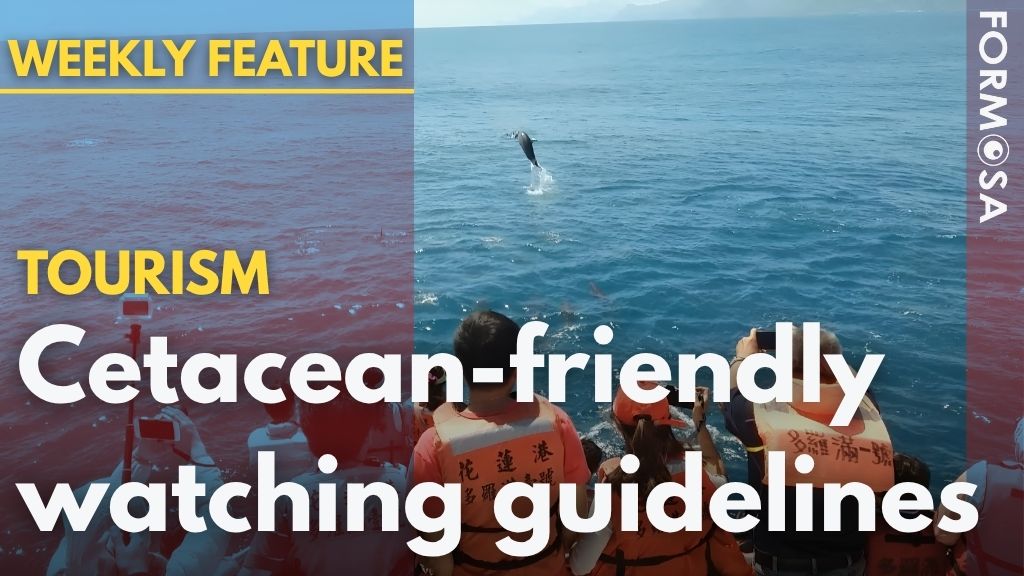
On a whale-watching boat departing from the Port of Hualien, pilot whales can already be spotted less than half an hour on sea. Under the sun, their slick bodies are even more radiant. Meanwhile, another group of svelte swimmers also appears.
They’re Risso’s dolphins, known for their white cross-hatched stripes. Their distinctive stripes are scars from preying and fighting with each other. In Taiwan, they only show up with pilot whales at the same time in the eastern seas.
Although sightings of cetaceans are quite common in Eastern Taiwan, it doesn’t mean it’s guaranteed.
We’ve now left Hualien and arrived at Yilan’s Wushi Harbor. Again, we boarded a whale-watching boat, but this time we didn’t see any dolphins or whales.
Ms. Hsieh
Tourist
It’s just my luck, but all three times I’ve gone on whale-watching tours recently I didn’t get to spot any. But that said, if there’s a chance, I’ll probably come and do this again.
Whether off Yilan or Hualien, because the Kuroshio Current passes through the east of Taiwan, there are plenty of food sources for cetaceans. Additionally, the ocean far out is hundreds of meters deep, creating the ideal environment for them to reside and hunt. According to statistics, more than 32 types of cetaceans are active around Taiwan, and in Hualien alone there are around 21 types.
Lin Dong-liang
Kuroshio Ocean Education Foundation
It’s really quite numerous, because globally there are only around 90 types of cetaceans, meaning that with 21 species in Hualien, it’s almost a quarter of all cetaceans, which is really quite something. There’s a 50% chance of sighting spinner dolphins. Basically it’s quite likely you’ll get to see spinner dolphins when you go out to whale-watch.
Although commonly known as either dolphins or whales, they’re actually both cetaceans, so it’s not about the size.
Lin Dong-liang
Kuroshio Ocean Education Foundation
Biologists have their classification system, and of course their method is more meticulous. You get toothed whales and baleen whales. They’re identified and classified according to their distinct characteristics. What we may know as whales or dolphins are all cetaceans or “whales” in general.
The first whale-watching tour in Taiwan departed from Hualien’s Ciyafangan fishing harbor in 1997. Since then, whale-watching tours has become a popular tourist activity, with more than 1 million counts of people having gone on such outings by 2023. Apart from Hualien and Yilan, whale-watching tours are now also offered in Taitung. Although a boon for the tourism, it’s not so great for the animals themselves.
In 2020, a tourist on a whale-watching boat recorded this footage of a speedboat ramming right at a pod of dolphins. The dolphins were frightened and dove. The incident was reported to the Yilan County Government with the video as evidence, and the speedboat operator got fined NT$20,000 and deferred prosecution by one year in accordance with the Act on Wildlife Conservation.
Wu Long-jing
Ocean Conservation Administration deputy head
That of course created a deterrent effect later on, so nothing like this ever happened again recently.
In recent year, tour operators are also restraining themselves. To prevent having too many ships going out at once, which would disturb cetaceans, operators at Yilan’s Wushi Harbor would first send out one ship to search for sightings. Other operators will be notified after a pod is spotted, and they’ll all head out to see it, making tours more efficient. Whereas in Hualien, operators take turns sending out a boat every half an hour, and notify others when there’s a sighting.
Tseng Cheng-tsun
Taiwan Cetacean Society secretary-general
The two different methods make whale-watching very different. One relies on chance, so in Hualien you rely on luck. But in Yilan, someone helps you look for them, and once you find them, it’s not about luck anymore. There will always be something there to watch.
In addition to information sharing, keeping distance with the animals is also an important point of friendly cetacean watching guidelines.
But in the end, it all depends on the operators’ conscience. Law enforcement is difficult on sea. A report can only be formalized with a video evidence.
Yang Wei-cheng
NTU Veterinary Medicine professor
It’s not possible to have police officers at sea at all times, or have law enforcement regulate the ships, so I believe it’s very different from law enforcement on land.
Lin Dong-liang
Kuroshio Ocean Education Foundation
I think this is something that could be revised in the friendly cetacean watching guidelines. The 300m rule applies to large whales internationally. But the pilot whales we saw today are only around 6m long. When it comes to those smaller cetaceans, we often do have to get closer.
The safe distance depends largely on the size of cetaceans spotted. But due to insufficient funding, there is a research gap in this area.
Yang Wei-cheng
NTU Veterinary Medicine professor
When we’re aware that being too close to dolphins will impact them, the question that follows is, why does it affect them? Is it because the noise volume is too high? Or is it because dolphins can see the whale-watching ships? Is the interference visual or aural? That’s what we want to know.
Apart from operators, the general public must also gain a deeper understanding of the ocean. The Ocean Conservation Administration introduced a touring lecture series for parents and kids to learn about the ocean together. In one class, the lecturer used Kundt’s tubes to simulate how sound waves travel through water. The method shows children clearly, that sound travels much faster through water than through air.
Kuo
Lecture series participant
Marine animals that communicate with sounds will be affected. I used to think it’s quite under the ocean.
Chiu Shan-lin
Lecture series participant
We must protect the ocean and not create so much noise, otherwise it disturbs them.
Cetaceans communicate through sounds. Therefore, if noise levels are too high, they could lose their sense of direction. To escape from the threatening situation, they may leap out of the ocean out of duress. The scene may be exciting for whale-watchers, but the animals are actually feeling stressed.
Yang Wei-cheng
NTU Veterinary Medicine professor
There was a whale-watching group that had ships form a semi-circle, and dolphins started leaping in the middle. They were leaping because they wanted to escape, because they were being entrapped. Underwater, the humming noises from the ships interfere with their sense of direction and make them confused.
Some eco-conscious operators are responding by lengthening each session from two hours to a half-day. They hope to change the mindset of tourists, so each trip is no longer about whale-watching, but to experience the ocean’s diversity.
Lu Shih-ming
Whale-watching tour operator
Someone left us a one-star review. They wrote that our tours were really tedious, because we wouldn’t go near the whales and dolphins, and that our tour guide even told them that they need to learn to wait patiently and really get to understand the ocean. They said it’s rubbish, because they paid to see the whales and dolphins.
Not everyone is happy with cetacean-friendly operating models. But Lu Shih-ming wants to serve customers that share his responsibility for the ocean.
Lu Shih-ming
Whale-watching tour operator
Consumers that agree with this concept and support you in following the guidelines—these are my clientele. Actually, all fishermen are aware how we should maintain a good relationship with whales and dolphins. What needs to change is to make more tourists accept this way of doing things. I believe with the promotion of cetacean-friendly guidelines, more and more people will come to embrace it.
Tseng Cheng-tsun
Taiwan Cetacean Society secretary-general
Whales and dolphins belong to nature. People should be aware that when you go out to sea, you’re visiting their home. They may not necessarily be home. So you should be open to that possibly and not pressure the ship captain.
Cetacean friendly watching guidelines are not only for operators, tourists should also embrace them. That way, Taiwan’s waters will reciprocate with more abundance for everyone to enjoy.
For more Taiwan news, tune in:
Mon to Fri at 9:30 pm on Channel 152
Tue to Sat at 1 am on Channel 53
#dolphins #whales #whalewatching #marinelife #beachlover #cruise #taiwantravel #hualien #yilan
鯨豚與遊客 誰才是海洋真正的主人?
2025-08-15
台灣的賞鯨季節從4月持續到10月,目前在宜蘭、花蓮、台東都有賞鯨旅遊活動,是東部旅遊的熱門選項之一。從1997年第一艘賞鯨船從花蓮石梯漁港出航之後,賞鯨活動就開始蓬勃發展,累計到現在已經超過百萬人次出海看鯨豚。然而,有部分業者為了讓遊客更清楚看到鯨豚躍出海面的難得畫面,會將賞鯨船開到魚群附近,勢必讓鯨豚受到驚擾,影響生態棲息。在海洋保育意識抬頭下,「友善賞鯨」的概念愈來愈重要,不過到底什麼是友善賞鯨?跟著我們的鏡頭到東海岸來看看。
來到花蓮跟著賞鯨船出海,一出花蓮港,不到半小時,領航鯨就出現在眼前。豔陽下,黑色的身軀更顯耀眼,而在此同時另一群嬌客,也悄悄現身。
這群嬌客名叫花紋海豚,因為覓食以及打鬥過程中,會留下白色傷疤,形成特殊印記,有如花紋因而得名,而領航鯨與花紋海豚,這兩種鯨豚混游,全台灣也只有在東部海域,才看得到。
雖說東部鯨豚目擊率相當高,但可別以為來到海上,就能輕易與牠們相遇。
離開花蓮,採訪團隊來到宜蘭烏石港,同樣是搭著賞鯨船出海,卻撲了個空。
[[遊客 謝小姐]]
“是很幸運地,槓了三次龜。當然有點失望,但是有機會的話,應該還會再來”
不論是宜蘭還是花蓮,台灣東部因為有黑潮通過,裡面有著鯨豚的食物來源,加上外海深達數百公尺的地形,成為牠們棲息、覓食的場地。據統計,台灣周圍海域,有32種以上的鯨豚出沒,而光是花蓮,就可以看到21種左右。
[[黑潮海洋文教基金會執行長 林東良]]
“其實是一個滿不錯的數字,因為全世界的鯨豚種類,基本上只有90種,所以在花蓮可以看到21種,其實已經將近四分之一,所以其實算是滿不容易的狀態。比如說像飛旋海豚,牠目擊率可以有50%,你只要賞鯨出海,原則上有很高的機會,會看到飛旋海豚”
就是因為有鯨與豚的差別,導致遊客分不清楚,認為鯨魚就應該是龐大的生物,其實在分類上,鯨跟豚都是相同的物種。
[[黑潮海洋文教基金會執行長 林東良]]
“生物學家他們有他們的分類系統,生物學家他們用的方式,當然比較嚴謹,所以他們會分成齒鯨或鬚鯨,因為他們是根據不同的特徵,來去做辨識分類,其實不管我們以前認知的鯨魚還是海豚,牠們都是鯨。”
從1997年第一艘賞鯨船從花蓮石梯漁港出航後,賞鯨產業開始蓬勃發展,累計至今已超過百萬人次,出海看鯨豚。後來不只花蓮、宜蘭,台東都有賞鯨的旅遊活動,不過這樣的賞鯨熱潮, 背後也產生不少亂象與糾紛。
2020年有遊客在賞鯨過程中,發現有遊艇業者快速衝入海豚群,造成海豚驚嚇而下潛。拿著影片向宜蘭縣政府檢舉,全案依違反野生動物保育法,對遊艇業者緩起訴一年,並裁罰新台幣兩萬元。
[[海洋保育署副署長 吳龍靜]]
“當然就後續也產生了相當的嚇阻效應,所以最近就沒有再有這樣的情況發生”
這幾年業者也發起自律行動,為了避免太多艘賞鯨船同時出海,打擾鯨豚,也為了提高賞鯨的效率,宜蘭烏石港業者,會先派出一艘搜索船,找到鯨豚後,會通知其他船家出發,再輪流欣賞同一鯨豚群。而花蓮則是安排每艘船班,相隔半小時出發,以目視搜尋,若有找到也會相互通報。
[[中華鯨豚協會秘書長 曾鉦琮]]
“這兩個差異就會導致後面的賞鯨模式有很大的不同,一個就是憑運氣,花蓮簡單來講就是憑運氣,但宜蘭的部分,就是有人先幫你找,找到後,就不是憑運氣了,就是會一直都有”
除了相互通報機制之外, 保持一定的距離,也是友善賞鯨的重點之一。
只不過保持距離,執行上並不容易,執法更是困難,因為要剛好有人拍到畫面, 才能有舉發的依據。
[[台大獸醫系副教授 楊瑋誠]]
“海上也不可能隨時能夠有警察,或是執法單位來規範這些船隻,所以我相信這跟陸地上面執法是不太一樣的情況”
[[黑潮海洋文教基金會執行長 林東良]]
“這其實也是我們在友善賞鯨的原則當中,覺得很需要去討論的細節,因為像三百公尺的訂定,在國外針對的其實是大型鯨。今天觀察到的領航鯨,牠們的體型大概是六公尺左右的體長,在面對這種小型鯨豚的時候,距離通常會再近一點”
不過賞大小鯨豚,各該保持多少距離,才不會對這群海洋生物造成干擾,目前礙於海洋研究經費不足,學界沒有進一步相關研究。
[[台大獸醫系副教授 楊瑋誠]]
“當我們知道這樣的距離,會對海豚有影響,下一個問題就是,為什麼這個距離會對海豚有影響,是因為這個距離的噪音太大聲嗎? 還是因為海豚眼睛會看到賞鯨船? 到底是視覺上面,還是聽覺上面的影響,這是我們想要知道的”
除了業者自律,也要加強民眾的海洋教育,海保署推出海洋親子巡迴講座,其中一堂課也提到水下噪音,講師用聲波管,模擬聲音傳遞的方式,透過實驗課程,讓小朋友了解原來水中的聲音,比空氣傳遞得更快更遠。
[[海洋巡迴講座學員 郭同學]]
“利用聲音溝通的那些魚類,會受到比較大的影響。我以前以為海底就很安靜]]
[[海洋巡迴講座學員 邱善琳]]
“就是我們要保護海洋,不要這麼多噪音,不然會影響牠們(鯨豚)”
由於鯨豚之間是透過聲音溝通,整體而言,一旦水下噪音太大,鯨豚會因為失去方向感,而倉皇逃生,躍出海面,增加牠們的精神壓力,形成一種壓迫。
[[台大獸醫系教授 楊瑋誠]]
“上次有一次是賞鯨船圍了一個半圓,海豚在中間開始跳, 牠在跳是在跳說,要往哪裡跑,因為牠已經被圍起來了。當你在水底,旁邊船這樣轟轟轟的時候,牠有可能會亂掉,不知道要往哪裡去。”
有永續生態意識的業者,直接改變賞鯨的班次,從原本兩小時拉長到半天,目的就是不想只專注在賞鯨,這樣單一的行為,而是要讓遊客拉大視野和格局,看到更豐富的海洋資源。
[[賞鯨業者 呂世明]]
“有個客人評鑑我們只有一顆星,他告訴我說這家公司超無聊,看到鯨豚不想靠近,解說員竟然還告訴我說,我們必須要等待,要學習等待,大海是什麼,他說就是狗屎,為什麼我是來花錢的,我是來看鯨豚的”
堅持友善賞鯨的結果, 很可能獲得一星甚至負評,但呂世明想要吸引的客群,是真正一起守護海洋的人。
[[賞鯨業者 呂世明]]
“當消費者是認同這件事情,大家支持你這樣行為的時候,我的客源就是這樣子來的。所有的漁民們其實都很清楚,大家都知道怎麼樣讓鯨豚,能夠跟我們保持非常好的關係,大家應該要改變的是,所有出來玩的客人,他們能夠接受這樣子的觀念,我相信這樣的賞鯨行程,一定會越來越好”
[[中華鯨豚協會秘書長 曾鉦琮]]
“鯨豚是自然界的動物,牠不可能說在就在,就是要讓民眾也知道,你進去海洋,是去拜訪這些鯨豚的家,牠不一定在家的時候,你也要抱著平常心,而不是施壓給船長”
友善賞鯨,不只是船家要落實的精神,遊客也需要有這樣的態度,台灣的海洋就會回饋更豐富的觀光資源。
更多新聞內容,請鎖定:
民視台灣台(152頻道)週一至週五晚上9:30
民視新聞台(53頻道)週二至週六凌晨1:00
Related News