Tsou farmers restart growing Alishan wasabi after 2017 cultivation ban
Tsou farmers restart growing Alishan wasabi after 2017 cultivation ban
2025-10-01
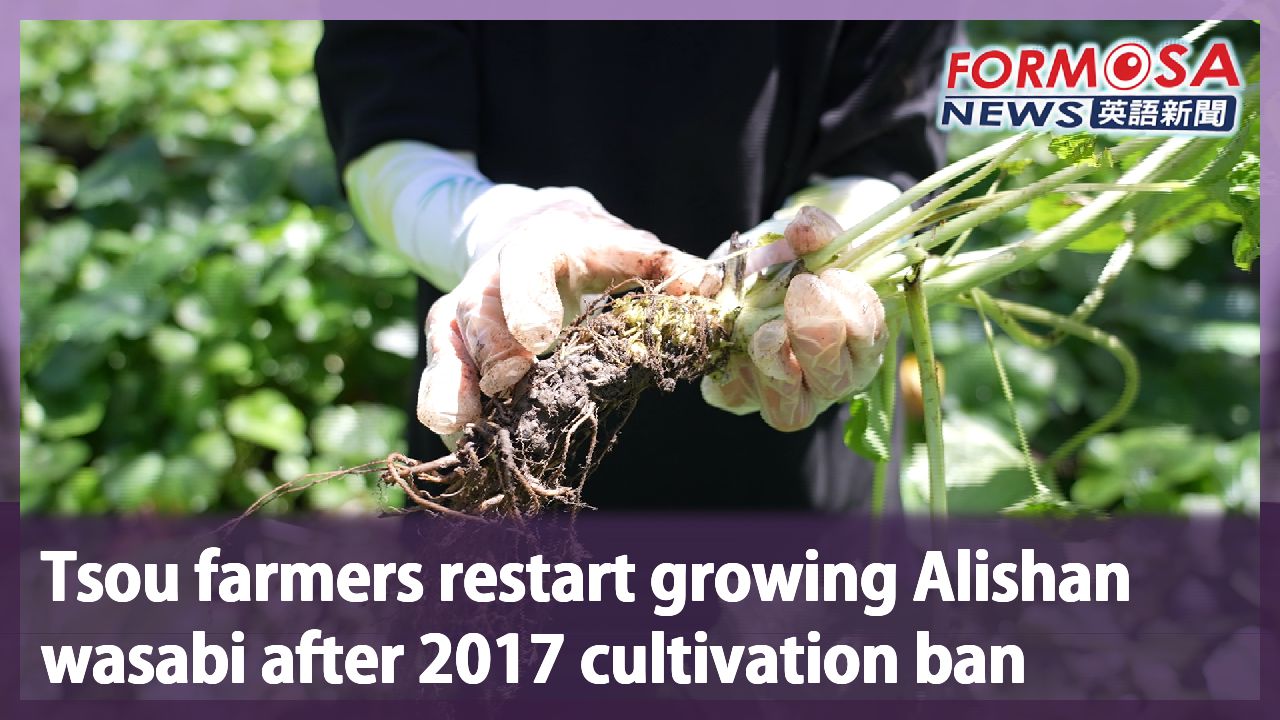
Wasabi grown in Alishan used to be a famous high-mountain specialty product. But in 2017, the government banned its cultivation in national forests, putting an end to the once-thriving industry. Recently, farmers from the Tsou tribe in Alishan have overcome challenges brought by high temperatures and pests to revive the farms, growing high quality wasabi once again. Now even buyers from Japan have come to inquire about the product.
Chen Meng-liang
Japanese cuisine chef
The taste is good. It’s basically the same as before. A customer brought some down before and it wasn’t as great. But this one’s not bad. It’s sweet and spicy at the same time.
After trying some, this experienced Japanese chef gave his seal of approval to the new variety of Alishan wasabi. But this sample didn’t come easy. In 2017, the Forestry Agency banned all wasabi production on recovered national forests, basically decimating the area’s “green gold” industry.
But in 2023, a collaboration between the Agriculture and Food Agency and the local government saw the creation of a wasabi cooperative among Tsou farmers in Alishan. They moved the mid-to-high-altitude wasabi farms that used to be at 2,000m to 3,000m down to 1,200m above sea level.
Wang Chi-sheng
Alishan wasabi cooperative member
The high-altitude farms were colder and didn’t have an issue with pests. But now that we’re growing here, it’s harder to fight against pests and disease. This is what we’re dealing with.
But they were able to overcome these challenges and by the end of 2024, successfully harvested their first batch of wasabi. Not only are the locals thrilled: Japanese wholesalers have even come from abroad to inquire about the product.
Liao Hui-fen
National Chiayi University professor of biochemical science
They’ve been missing the Alishan wasabi from before. So as soon as they heard that we’ve started growing it again, they were excited to come and see. They actually love our wasabi. When they came before, they asked for long-term purchasing contracts even for the leaves and stems.
Wasabi already sells for more than NT$6,000 per kg, and can reach over NT$10,000 for produce of high quality. Once legendary, the “green gold” of Alishan is making a comeback.
For more Taiwan news, tune in:
Mon to Fri at 9:30 pm on Channel 152
Tue to Sat at 1 am on Channel 53
#wasabi #Alishan #Tsoutribe #agriculture #Japanesecuisine #greengold
"曾經禁種"導致產業沒落 阿里山山葵回來了
2025-10-01
阿里山的山葵,曾經是名聞遐邇的高山特產,不過在2017年,政府全面禁止國有林地栽種山葵後,盛極一時的山葵產業,從此沒落;最近,阿里山鄒族的農民們,克服了高溫與病蟲害的挑戰,重新復耕山葵,不僅品質好,風味也相當優雅,甚至吸引日本商社跨海前來洽詢。
[[日式料理廚師 陳孟亮]]
"味道可以,跟以前的沒有差很多,之前有一個客人帶下來,味道沒有那麼好,它這個味道還不錯,會甜而且會辣。"
品嘗一口,阿里山山葵合作社栽種最新品種的山葵,資深日式料理師傅,給了肯定的評價。這一口山葵可是得來不易, 2017年林務局全面回收國有林班地,禁種山葵後,曾經的阿里山綠金,從此消失,市場上山葵一根難求。
在農糧署與地方政府的協助下,2023年,阿里山鄒族農民成立山葵合作社,將過去在兩三千公尺、中高海拔生長的山葵搬下山,改在1200公尺的部落復耕。"
[[阿里山山葵合作社社員 汪啟聖]]
"以前種到高海拔的地方比較冷,那個病蟲害比較沒有。可是我們拿到這裡種,病蟲還蠻辛苦的對抗,所以這是我們的困難。”
農民克服病蟲害與高溫的挑戰,2024年底,成功採收第一批山葵,不只族人開心,就連日本商社也跨海前來洽詢。
[[嘉義大學生化科技學系 廖慧芬教授]]
"在他們印象裡面,就是一直懷念當年的,台灣阿里山的山葵,所以一聽到我們的阿里山山葵又繼續再種了,他們就很高興的來看,其實對我們的山葵非常的喜歡,因為之前來看的時候,包括我們的葉子,包括我們的根莖,其實他們都希望說能不能做長期收購的合約。"
市場上的山葵價格,已經喊到一公斤六千元以上,品質好的,甚至要破萬元。曾經的阿里山綠金傳奇,如今正努力實現中。
更多新聞內容,請鎖定:
民視台灣台(152頻道)週一至週五晚上9:30
民視新聞台(53頻道)週二至週六凌晨1:00
Related News