Taiwan, Japan rock formations celebrate eight-year sistership
Taiwan, Japan rock formations celebrate eight-year sistership
2025-11-11
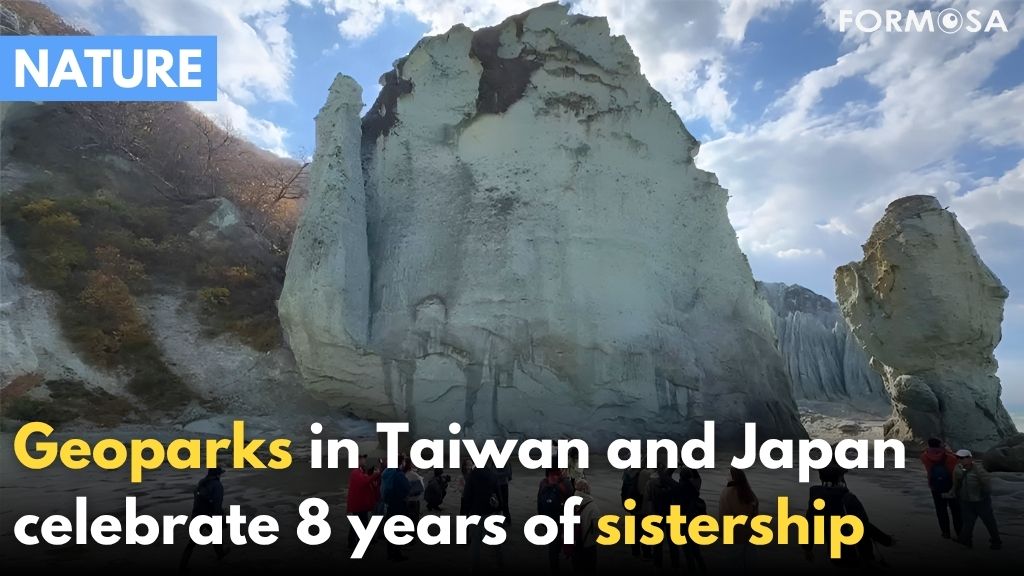
At first mention of famous rock formations, most Taiwanese think of the Queen’s Head formation at Yehliu. But the northernmost prefecture on the main island of Japan, Aomori, has formations that are just as distinctive. The Buddha’s Cove Geopark on the west coast of the Shimokita Peninsula bears formations reminiscent of Buddhist statues. In 2017, it became sister parks with Yehliu, which recently sent a group to Japan for an exchange. They met with Aomori Governor Soichiro Miyashita, who said he hopes to visit Yehliu on his next trip to Taiwan.
White cliffs tower above the water, speckled with grayish-white tuff. The breathtaking columns stretch out for 2km down the coast.
Rows upon rows of massive columns stand in formation, some dubbed the “Buddha’s head” while others are called “paradise shore,” lending the site a sacred aura.
Lin Jiun-chuan
NTU professor of geography
They weren’t just formed from wind erosion—it’s also corroded. During high tide, the waves crash against it. So looked at this way, it’s changing faster than Yehliu.
Lin Chun-yi
Yehliu Geopark deputy chief
We’re honored to visit the Buddha’s Cove on the Shimokita Peninsula Park to see the Buddha’s head formation. We’ve had a long-standing relationship with the park, now in our eighth year. I’m happy to finally be here in person today. Whenever you have the chance, we invite everyone to come and visit.
A volcanic eruption 4.5 million years ago kick-started the creation of this landscape, composed of volcanic ash and pumice that solidified into tuff. Tiny white pebbles are still visible to the naked eye. Like Yehliu, it’s become a popular tourist destination. The governor even revealed he has plans to visit on his next trip to Taiwan.
Soichiro Miyashita
Aomori Governor
To me, meeting everyone from the Yehliu Geopark makes me as happy as seeing family. This visit has only further deepened my desire to see Yehliu.
Liu Ying-san
Geoparks Association of Taiwan chair
The special thing is they have over 10—about 10 geoparks that are recognized by UNESCO. We hope to learn from their experience to ensure sustainable practices in all operational aspects.
This exchange between geoparks in Taiwan and Japan is not only a learning opportunity, but also deepens the close friendship between the two countries.
For more Taiwan news, tune in:
Mon to Fri at 9:30 pm on Channel 152
Tue to Sat at 1 am on Channel 53
#geopark #Yehliu # Hotokegaura #BuddhasCove #Aomori #Japan #TaiwanJapan #sisterparks #geology #travel #rockformation #volcanic
"野柳.佛之浦"姊妹地質公園8週年 青森知事:盼拜訪北海岸
2025-11-11
說到知名的奇岩地景,大家可能會想到北海岸的”野柳女王頭”,不過,在日本本州最北端的青森縣,其實也有奇岩勝地,下北半島西岸的「佛之浦」地質公園,就有岩石外型跟佛像極為相似,2017年跟野柳締結為姊妹公園,台灣訪問團這回前往日本交流,青森知事宮下宗一郎親自接待,透露下次訪台想到野柳看看。
白色岩壁,高聳矗立海岸線,除了灰白色凝灰岩,還有綿延兩公里的岩柱群,放眼望去,美景盡收眼底。
一個個巨石群列隊排排站,有的叫"如來之首",有的命名為"極樂濱",海岸線多了一份神聖氛圍。
[[台灣大學地理系教授 林俊全]]
“因為這不能只講風化,還要講侵蝕,漲潮的時候還會打到,所以如果這樣來看的話,這個地方的速度,會比野柳來得快”
[[野柳地質公園副總 林俊毅]]
“我們很榮幸可以來到下北地質公園的佛浦,來看如來之首,我們跟下北地質公園,也有很多年的淵源,交流已經第八年,很開心今天終於來到現場,歡迎大家有空可以到這邊,來走一走,看一看”
岩石在450萬年前,火山噴發後逐漸形成,由火山灰和浮石構成凝灰岩,小小白色石子,肉眼還能看見,和野柳一樣成為觀光勝地,當地知事也透露,下次訪台想去這個地方。
[[日本青森縣知事 宮下宗一郎]]
“對我而言,能見到這個野柳地質公園(團隊)的各位,彷彿是見到家人一樣的開心,而且透過這次的拜會,我更加深的去拜訪野柳的想法”
[[台灣地質公園學會理事長 劉瑩三]]
“特別是他們有十多個,大概有十個地質公園,已經是世界地質公園,我們希望學習他們的經驗,在經營管理方面都能夠持續的進行”
這場台日地質公園的交流,不只是互相學習,更展現台日之間深厚友誼。
更多新聞內容,請鎖定:
民視台灣台(152頻道)週一至週五晚上9:30
民視新聞台(53頻道)週二至週六凌晨1:00
Related News