Kaohsiung touts achievements in AI urban management
Kaohsiung touts achievements in AI urban management
2026-11-03
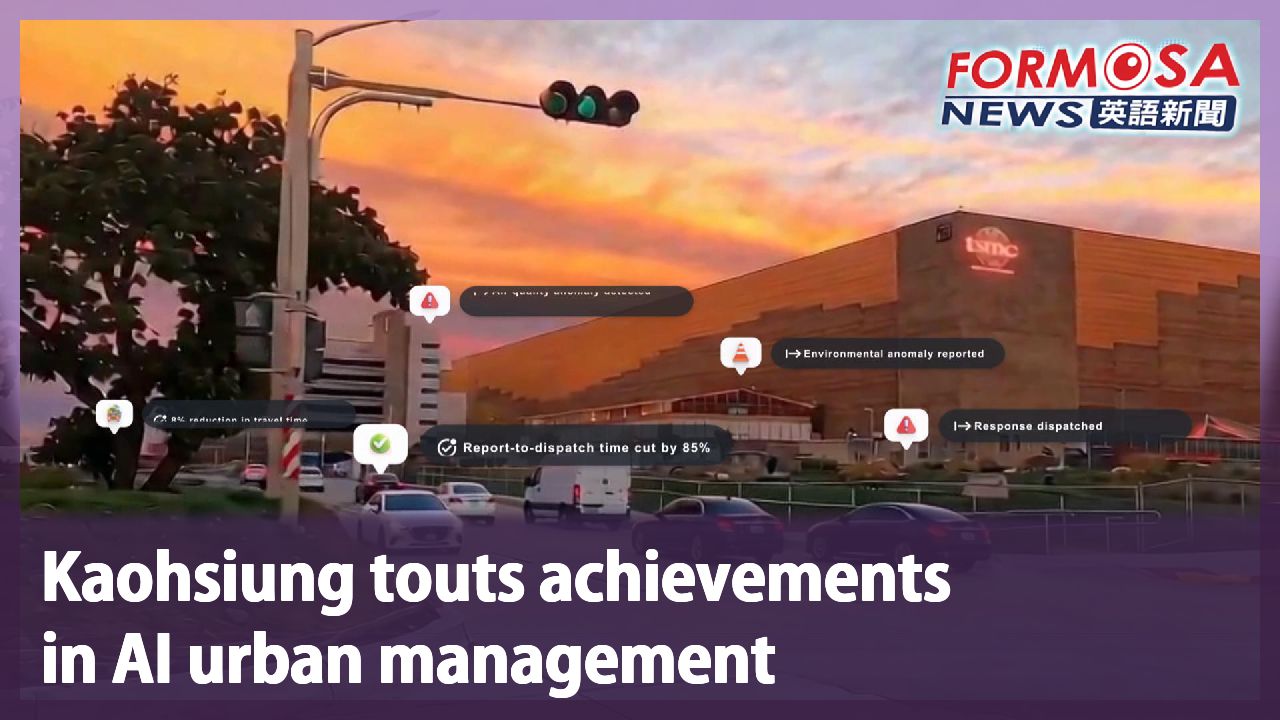
The Kaohsiung City Government recently held a presentation touting its Smart Lighthouse Project, which harnesses the ability of AI to manage traffic, inspect roads, monitor flooding, and maintain the environment. Through this initiative and more, Kaohsiung is laying the groundwork to create a cutting-edge city of the future that balances governance autonomy, institutional innovation, and industrial power. Even compared with other initiatives, it serves as a global model for smart urban governance.
Existing CCTV footage and municipal data are analyzed by vision-language models to detect anomalies, turning the raw observations into trackable data. From there, reporting, dispatching, and any subsequent tasks are managed seamlessly. Kaohsiung’s Smart Lighthouse Project enables the city to be proactive, responding in real-time rather than addressing issues after the fact.
Chen Chi-mai
Kaohsiung Mayor
We currently have the world’s earliest and largest sovereign AI at the city level. It serves as the brain for municipal governance.
The city’s presentation focused on four main applications: traffic, public works, water management, and environmental protection. With the new system, municipal data no longer languish in silos.
Chen Chi-mai
Kaohsiung Mayor
This platform aims to break down these data silos, allowing the city’s central brain to integrate disparate datasets to make well-informed decisions.
Real-time traffic conditions from the Transportation Bureau. City buses acting as inspectors for the Public Works Bureau. Image recognition to detect flooding for the Water Resources Bureau. AI monitoring of emissions and street litter for the Environmental Protection Bureau. Through the city’s smart governance platform, municipal departments can keep track of incident locations, live video, and response progress to delegate, dispatch personnel, and fix problems while also tracking outcomes.
Chien Chih-cheng
Chunghwa Telecom chair
Among all the worldwide efforts to build out smart cities, this one is truly a pioneer.
Using existing municipal data, AI technology, and municipal workflows allows the city to detect anomalies earlier. Agencies can then get the information they need to quickly address any issues, gradually realizing the promise of improving municipal governance through technology. According to the mayor, a true “smart city” makes quiet improvements behind the scenes, making life better, even when you don’t notice it.
For more Taiwan news, tune in:
Mon to Fri at 9:30 pm on Channel 152
Tue to Sat at 1 am on Channel 53
#smartcity #Kaohsiung #SmartLighthouseProject #AI #ChenChimai #sovereignAI
高雄"AI燈塔智慧治理"成果發表 展現AI應用城市治理
2026-11-03
高雄市政府舉辦「高雄AI燈塔智慧治理成果發表會」,展示A|應用於交通管理、道路巡檢、積淹水監測以及環境維護等領域的成果。充分展現高雄在智慧城市發展上,兼顧治理自主性、制度創新,與產業動能的前瞻布局,也是全球智慧治理新模式的典範!
整合既有城市影像,與跨局處資訊,並運用視覺語言模型,分析影像、辨識異常。把辨識結果,轉化為可追蹤的事件資訊,串接通報、派案以及後續處理流程,高雄市的AI燈塔智慧治理,正在讓城市管理,從問題發生後的被動處置,逐步走向主動發現與即時應變。
[[高雄市長 陳其邁]]
“我們是現在目前全球,最早也是規模最大的城市級的主權AI,做為一個城市治理的大腦”
成果發表會上,聚焦交通、工務、水利以及環保,四大市政應用。讓市府掌握的資訊,不再有孤島的情況。
[[高雄市長 陳其邁]]
“平台的建立,它就是要來打破這些資料的孤島,讓城市的大腦能夠根據不同的資料的整合,能夠做為一個綜合的判斷”
交通局的即時路況資料,工務局讓公車化身城市巡檢員,水利局的積淹水影像辨識,和事件通報機制,還有環保局的煙霧監測,道路垃圾等AI辨識情境,透過智慧治理平台,整合事件位置、現場影像以及辦理進度,讓相關局處得以依權責接續認領、轉派及處理,並追蹤案件辦理情形。
[[中華電信董事長 簡志誠]]
“那這個是在世界的智慧城市的發展裡面,算也是一個先驅”
透過既有城市資料、AI技術和市政業務,讓城市異常更早被發現,跨局處權責單位,更快掌握資訊、後續處理更逐步實現,以科技提升城市治理效能的目標。陳其邁強調,智慧城市其實是民眾沒有感覺,但慢慢的就在改善,市民的生活。
更多新聞內容,請鎖定:
民視台灣台(152頻道)週一至週五晚上9:30
民視新聞台(53頻道)週二至週六凌晨1:00
Related News